Home · Problems · The bank is collapsing
The bank is collapsing.
The lawn is breaking away at the water, and there is a drop where the edge used to be. Here is what is happening under the surface, how it can be repaired, and when each repair is the wrong answer.
Get my free online estimate or call (954) 284-0812
Florida Certified General Contractor CGC1513865 · 5-year workmanship warranty · Most jobs $50,000 to $500,000
1Signs
What you see
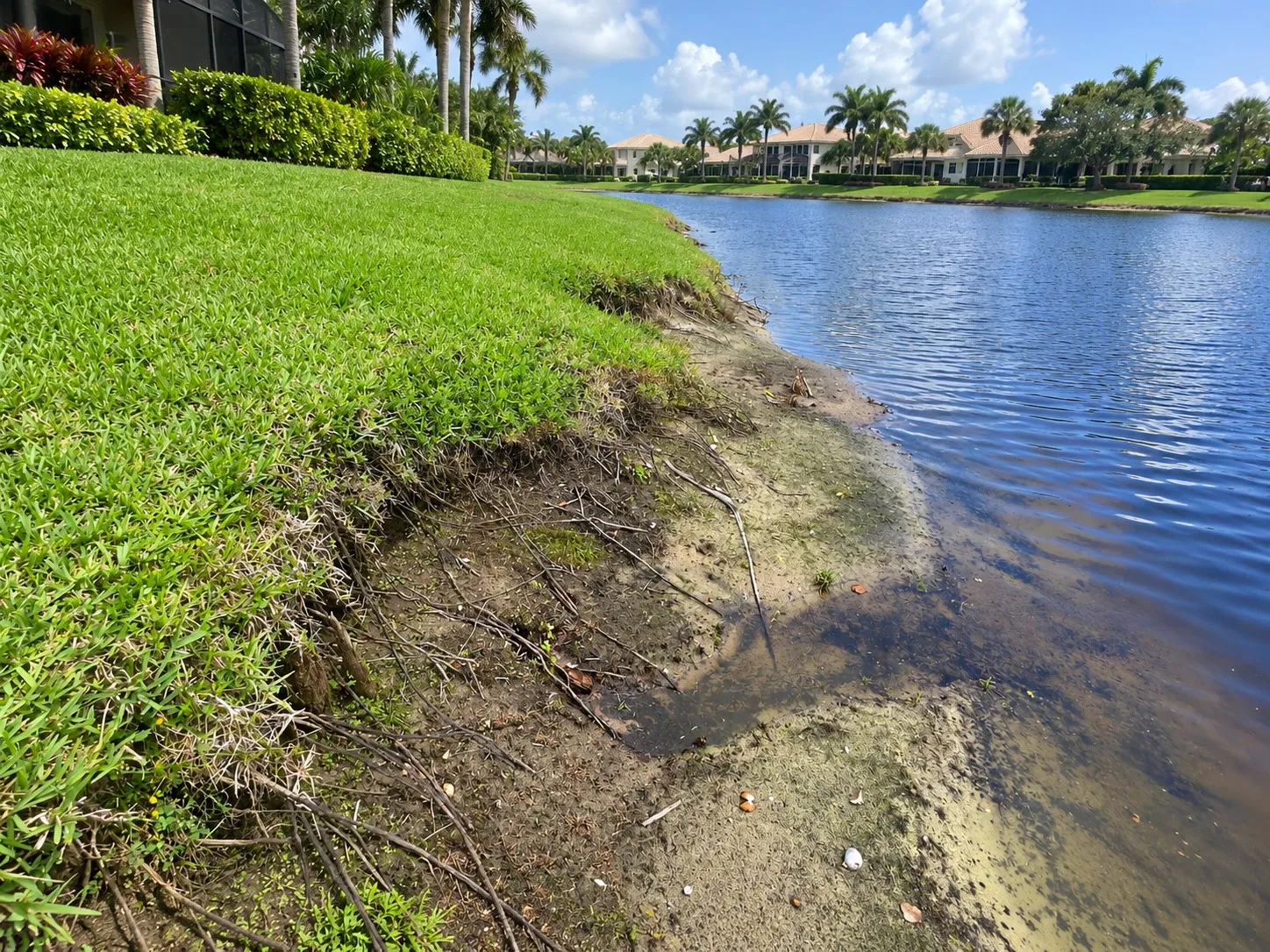
Lake bank erosion, as it looks from the lawn.
The lawn breaks away at the water. Bare soil shows. Where the bank used to slope into the lake, there is now a step.
People call it a sunken bank. The step is a drop-off: the place where erosion has taken the soil away. It can be one foot high, or four.
Look higher up the bank as well. A gully or a sunken spot can mean water is running across the bank from above.
2Diagnosis
What is happening under the surface
A sunken bank has a cause. We find the cause before we fix the symptom.
Waves at the toe
Waves from wind and boats undercut the bank at the waterline. This is the job a geotube does: it holds the toe of the bank against the waves.
Runoff from above
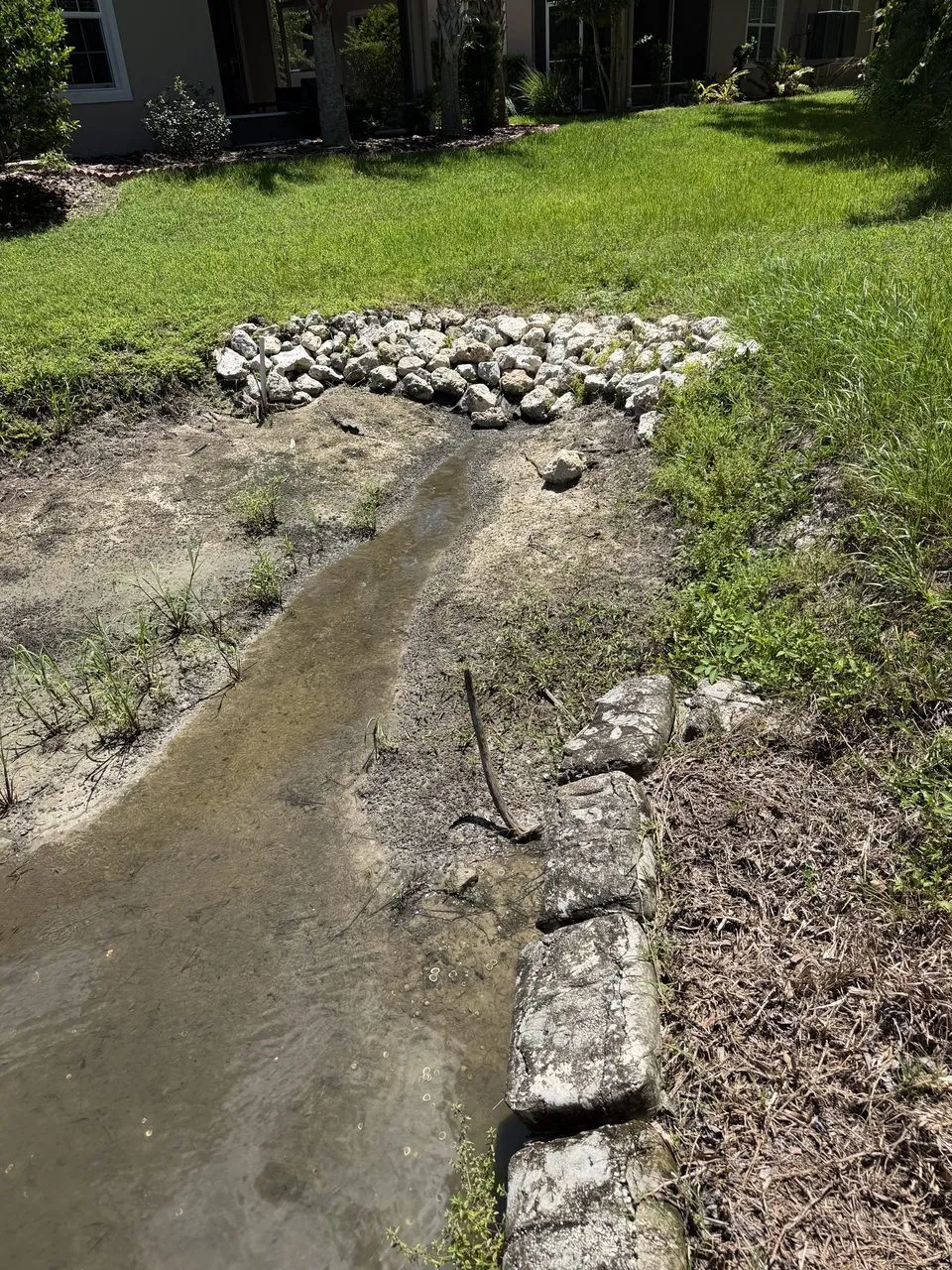
Rain, irrigation, roof downspouts and drain pipes send water down across the surface of the bank. Where a pipe empties onto the bank, the water cuts gullies and sunken spots.
A tube at the water does not answer this. The slope and the sod on it do. On a geotube repair, downspouts and drain lines are led past the section being restored.
Deep water with no shelf
Some banks drop straight into deep water, with no ledge under the surface. A deep section with no shelf is the other cause we find behind a sunken spot. It also changes the method: a tube needs a shelf to sit on.
- Waves at the toe
- Runoff from above
- The shelf, where there is one
- The drop-off
- The 4:1 slope SFWMD designs to (dashed)
What the public sources say
The South Broward Drainage District says that, over time, it is not unusual for the land along lakes and canals to show erosion. How fast it goes and how severe it gets, the district says, depends on ground cover, slope, soil, rain intensity, wind and storms, and burrowing animals.
The University of Florida’s extension service, in its questions and answers on stormwater wet ponds, names wind-driven waves as a cause of bank erosion. It says that ponds with erosion problems fill in faster and need dredging more often, that erosion leaves steep slopes that can be dangerous, and that it can take yard space from residents.
3Options
Four ways to repair it
We install all four. The site visit decides which one fits your bank, not a photo.
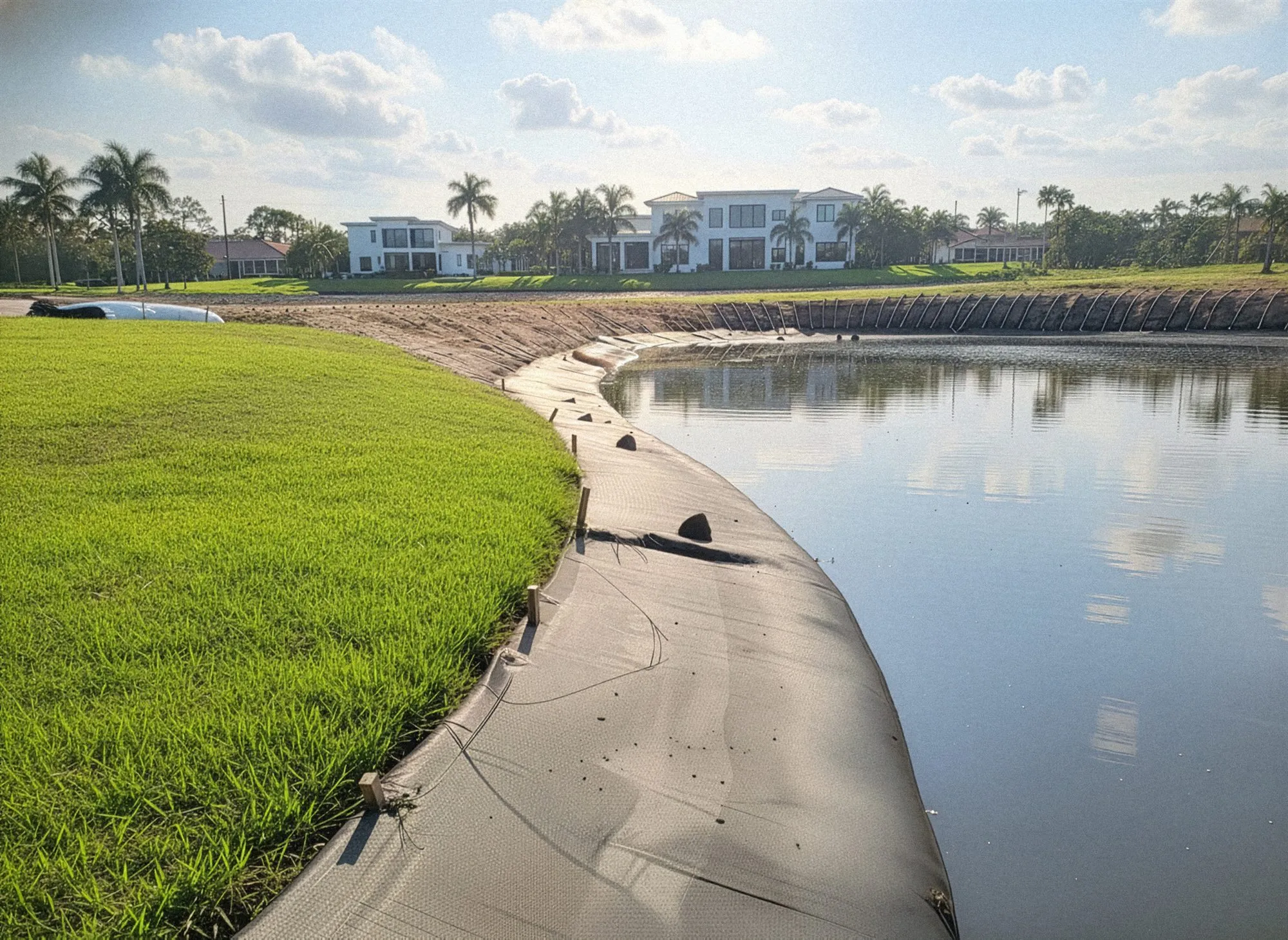 Geotube A sleeve of woven geotextile, filled with sand, that rebuilds the edge of the bank. Sod covers it down to the water.
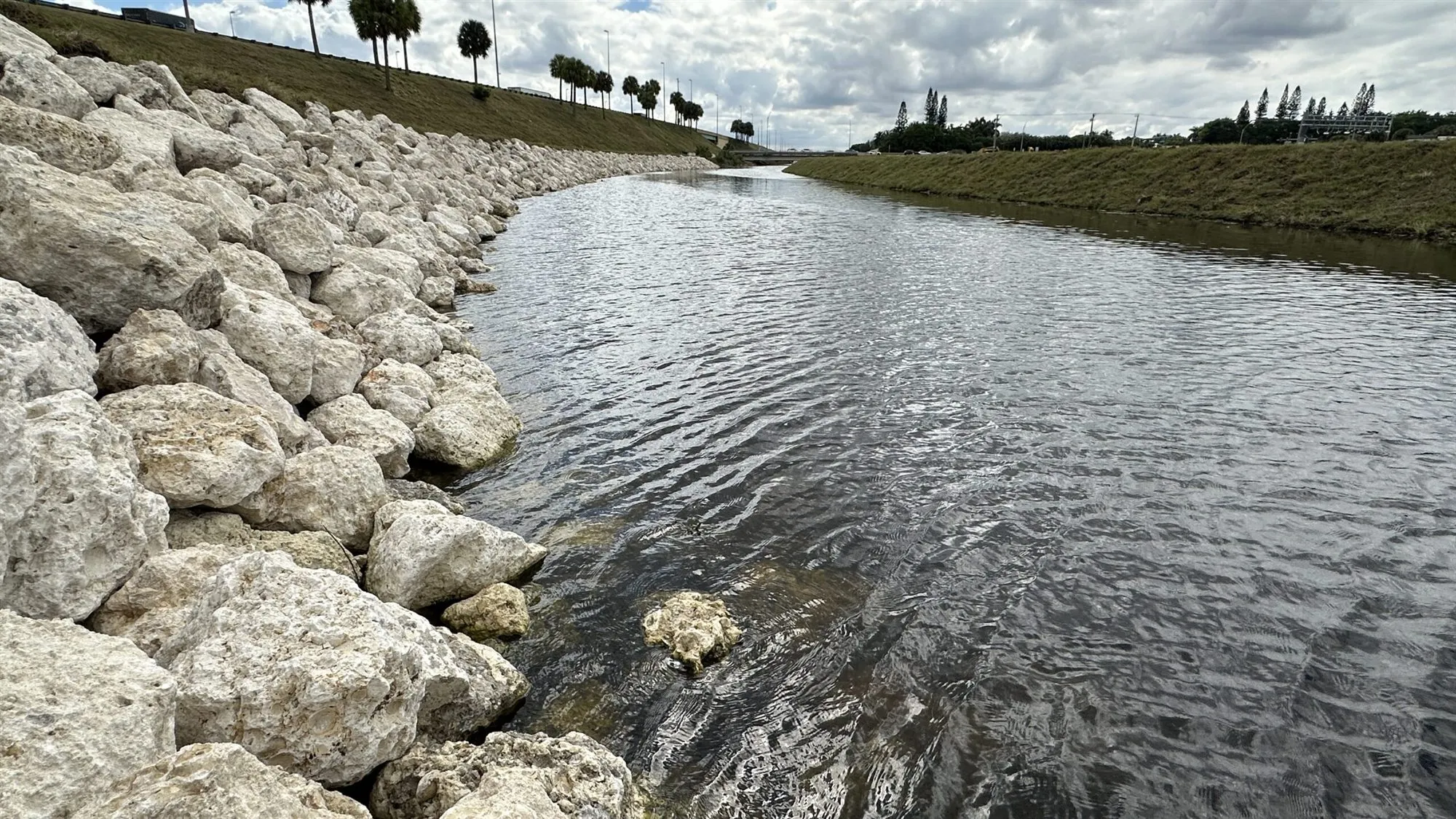 Riprap Stone laid on a shaped slope over filter fabric. The fabric keeps the soil from washing out between the stones.
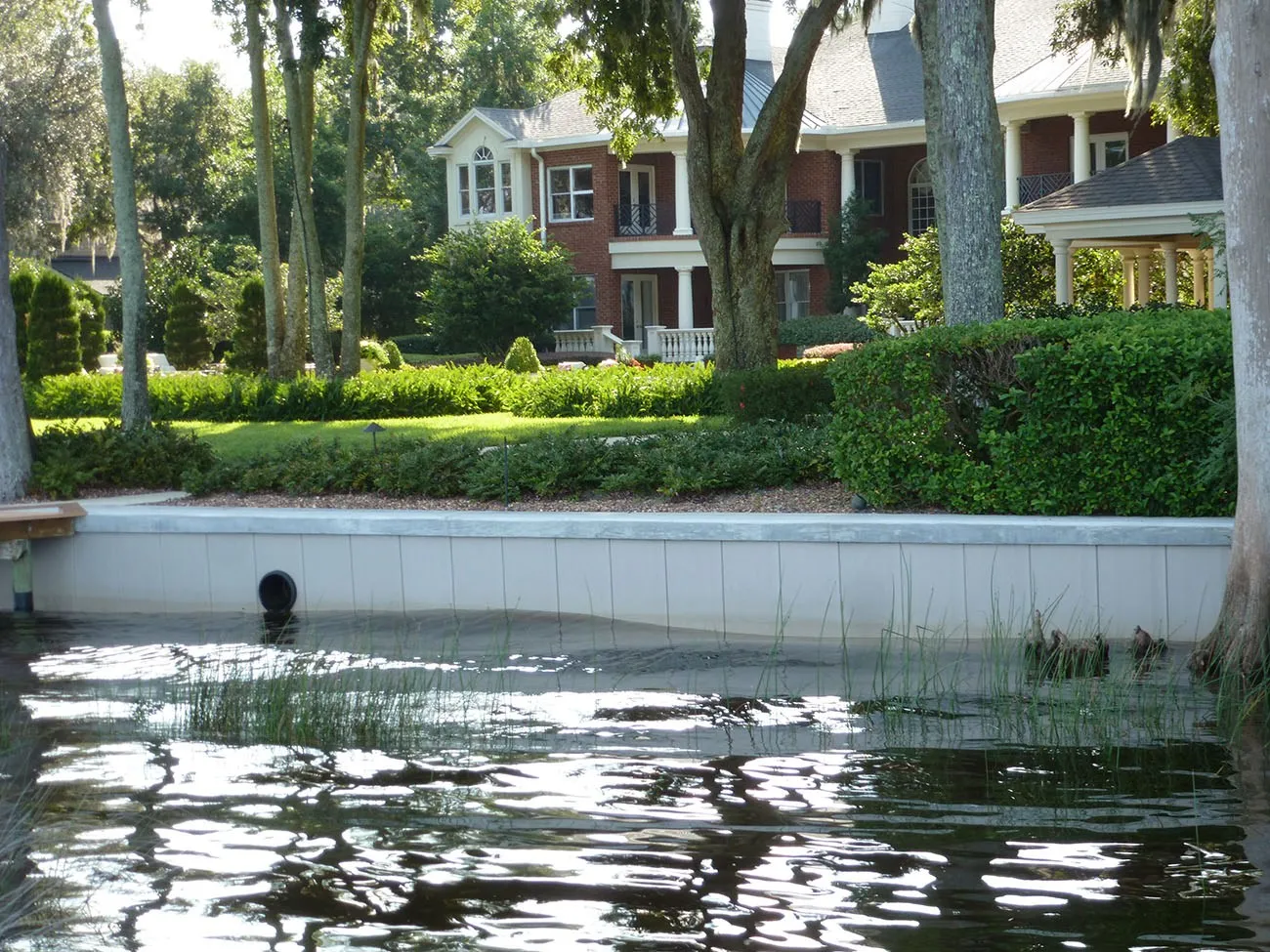 Seawalls Vinyl sheet piles driven side by side, with a concrete cap that ties the tops together.
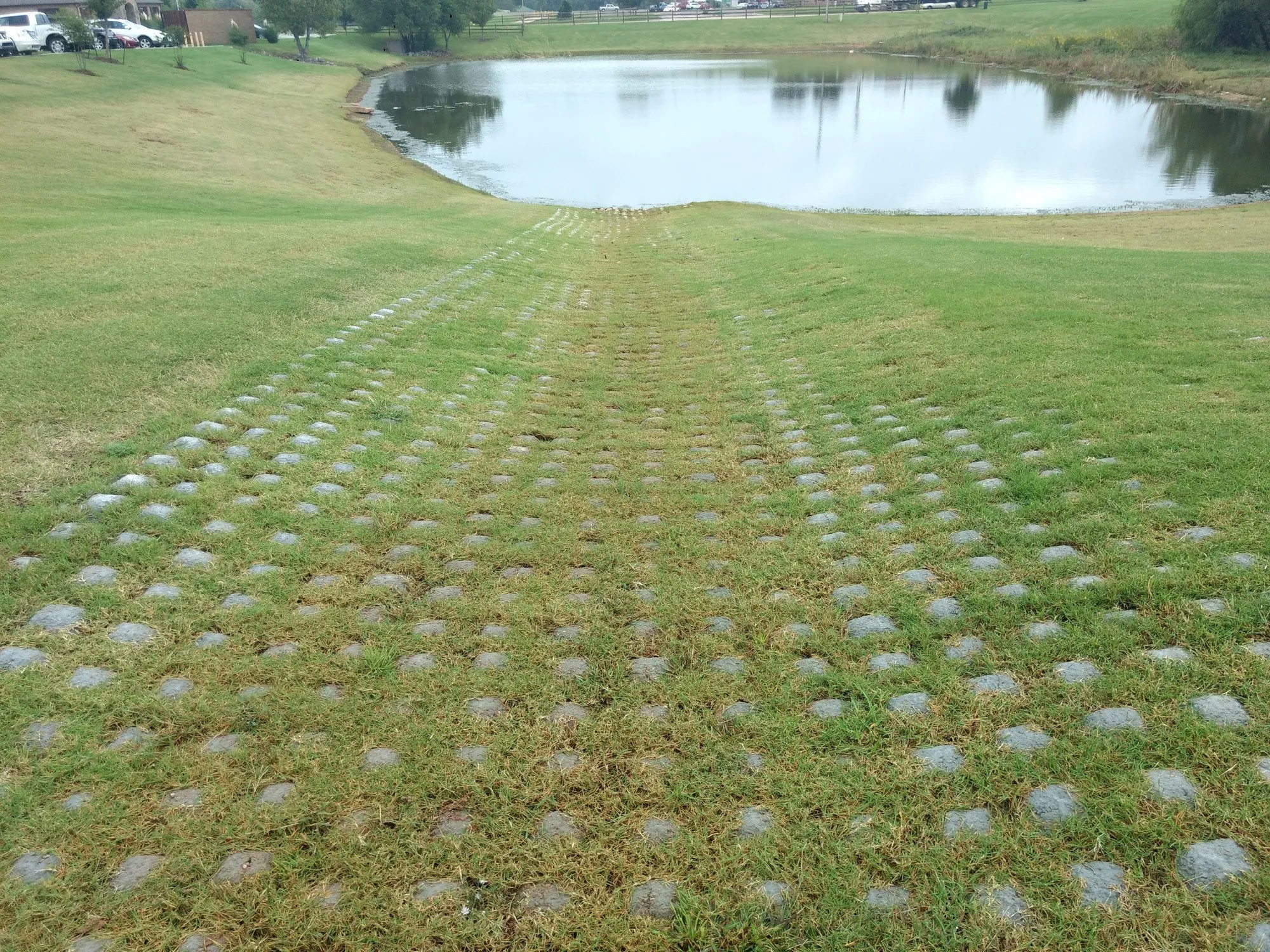 Flexamat A mat of concrete blocks, unrolled over the prepared bank. Grass grows up through it, and the concrete is still there.
4Estimate
Get your free online estimate
Takes about 20 seconds. Your price range arrives by email within 24 hours.
Rather talk? Call (954) 284-0812.
What happens after you write
We call back
Within 2 hours on business days (usually sooner).
Free site visit
For one lake, within 7 days (usually sooner). The method is settled on site.
Written proposal
With a price range, within 2 days of the site visit.
If you ask for an online estimate instead, you get a price range within 24 hours. It is a range, not a quote, and it never names a method.
5Questions
Quick questions
What do you check on the free site visit?
Before we quote anything, we walk your shoreline and answer five questions.
How big is the drop-off?
One foot or four? It sets the size of the repair and, for a geotube, how many tubes it takes.
Is there a shelf?
A ledge under the water where a tube can sit. We look for about five feet of width about six inches down, and we check it with a grade rod, not a guess. No shelf changes the method, not just the price.
Does the lake have a water control structure?
A structure that holds the level steady is what makes a geotube safe to recommend. If the level swings two feet or more between seasons, we look at other options.
What is the slope?
In the South Florida Water Management District, stormwater lakes are designed to a 4:1 side slope. We look at yours against that. Other districts have their own criteria.
Where is the water coming from?
A sunken spot on the bank has a cause: runoff from a downspout or a drain pipe, or a deep section with no shelf. We find the cause before we fix the symptom.
The visit is free for one lake, and we come within 7 days (usually sooner). A written proposal with a price range follows within 2 days of the visit. One question for you: what is your budget cycle? We write the proposal to match. For a community with several lakes we quote a paid shoreline survey instead.
Do I need a permit, and who handles it?
We do. We prepare the permit paperwork and we file it, and the proposal says which permit your lake needs and how long it should take. We tell you before you sign.
Stormwater lakes in the South Florida Water Management District are designed with side slopes no steeper than 4:1, from the top of the bank to at least two feet below the control elevation (SFWMD Applicant’s Handbook Vol. II, section 5.3.2(e)). A bank that has eroded steeper than that is no longer the profile the district designs to, and restoring it is maintenance of a permitted structure.
Responsibility for the permit does not run out. Florida’s rule says the entity that operates and maintains the system “shall remain liable for compliance with the terms of the permit in perpetuity” (Rule 62-330.310(6), F.A.C.). The Lake Worth Drainage District notes that this responsibility typically passes to the association.
Some drainage districts add rules of their own. The South Broward Drainage District requires a district permit for any erosion restoration work inside its boundaries, and lists geotubes among the methods used successfully in the district. In other parts of South and Central Florida a different water management district applies, with its own criteria.
What does it cost, and why do you measure first?
Most jobs fall between $50,000 and $500,000. The realistic minimum is about $10,000. Four things move the price: equipment access, permits, the depth and condition of the lake bottom, and the length of shoreline.
A walk along the bank does not check the lake every ten feet. So a proposal can count one tube where the water turns out to need two. That is a change order, and nobody enjoys those. For long or deep shorelines, or several lakes, we offer a paid drone and sonar survey, above and below the waterline, before we price. The paid shoreline survey
Can you tell us the method from photos?
No. Photos help us prepare, but the site visit decides the method. We do not recommend a method from a photo or from a calculator.
Why not just seed it, or hydroseed?
We have done both. On a 4:1 bank the first rain carries seed into the lake, with or without a blanket, so we do not recommend it. Sod holds from the first day.
What about our landscapers?
On a geotube bank, mowing on top is fine. Edging at the waterline is the one thing to stop. We give your crew a one-page guide and walk the bank with them at handover.
What is free, and what is paid?
The site visit for one lake is free, and we come within 7 days (usually sooner). The drone and sonar shoreline survey is a paid service, sold on its own. You keep the survey either way.
What do you put in writing?
A five-year workmanship warranty on what we build, and no handover until the sod has rooted.