Home · Technology · Seawalls
1Problem
Seawalls and vinyl sheet piling in South and Central Florida
The seawall is cracking, or you think you need a new one. Either way, the site visit comes first. Where a wall is the right answer, we build it mostly in vinyl, with a concrete cap.
Get my free online estimateTakes about 20 seconds · no site visit needed · or call (954) 284-0812
Is this your shoreline?
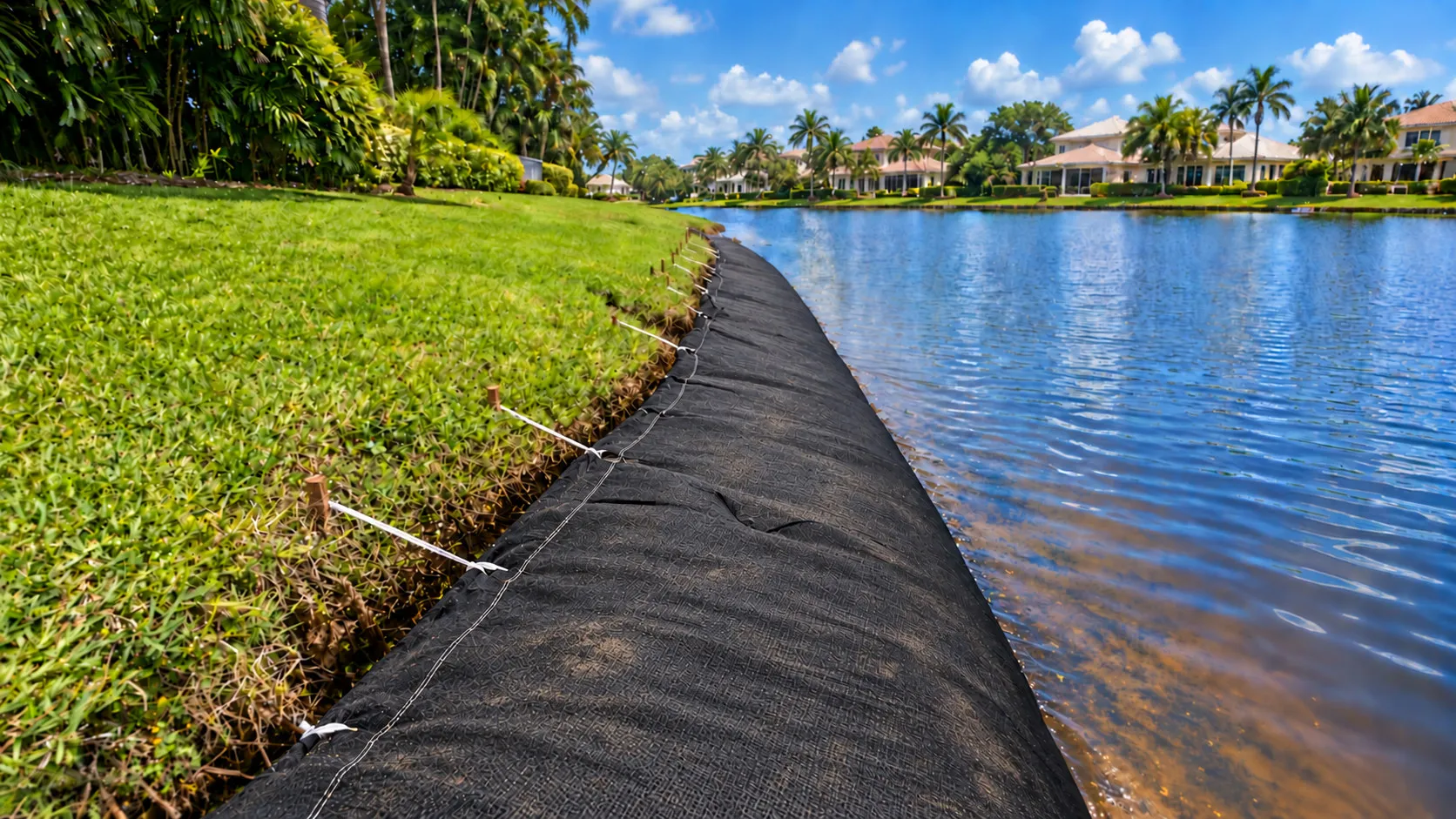
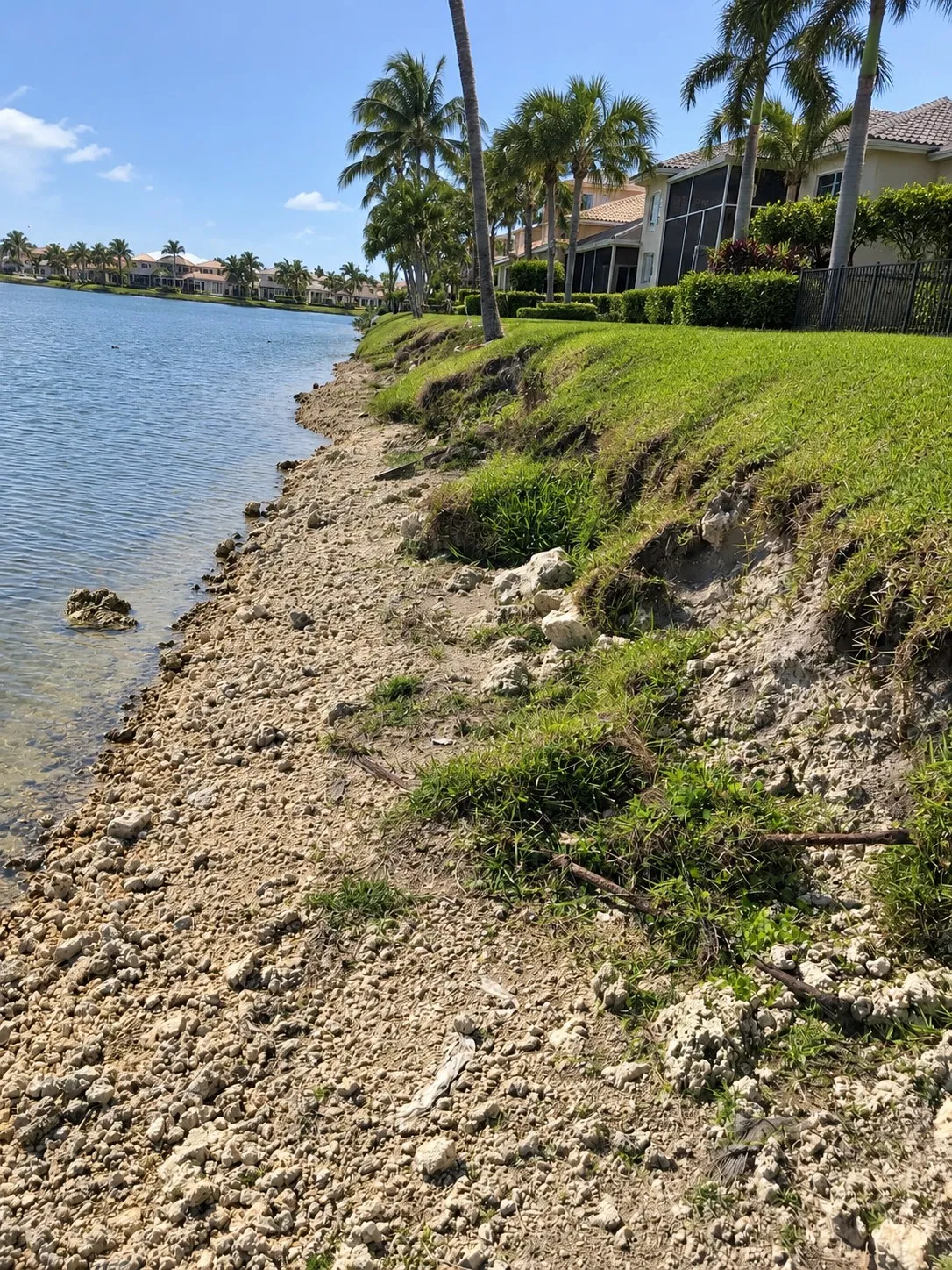 My bank is erodingWaves wash the soil out of the edge, and the bank breaks away.
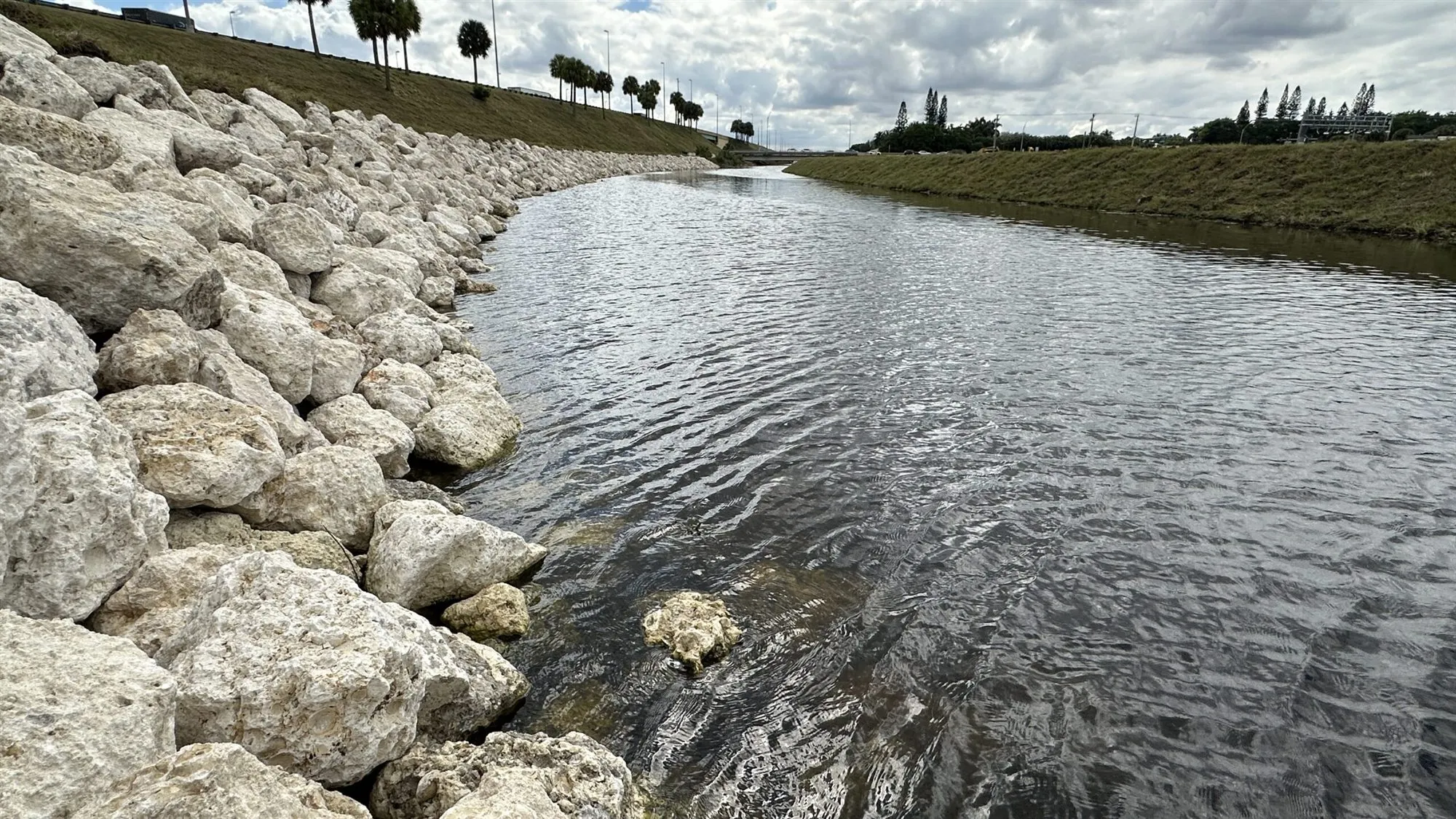
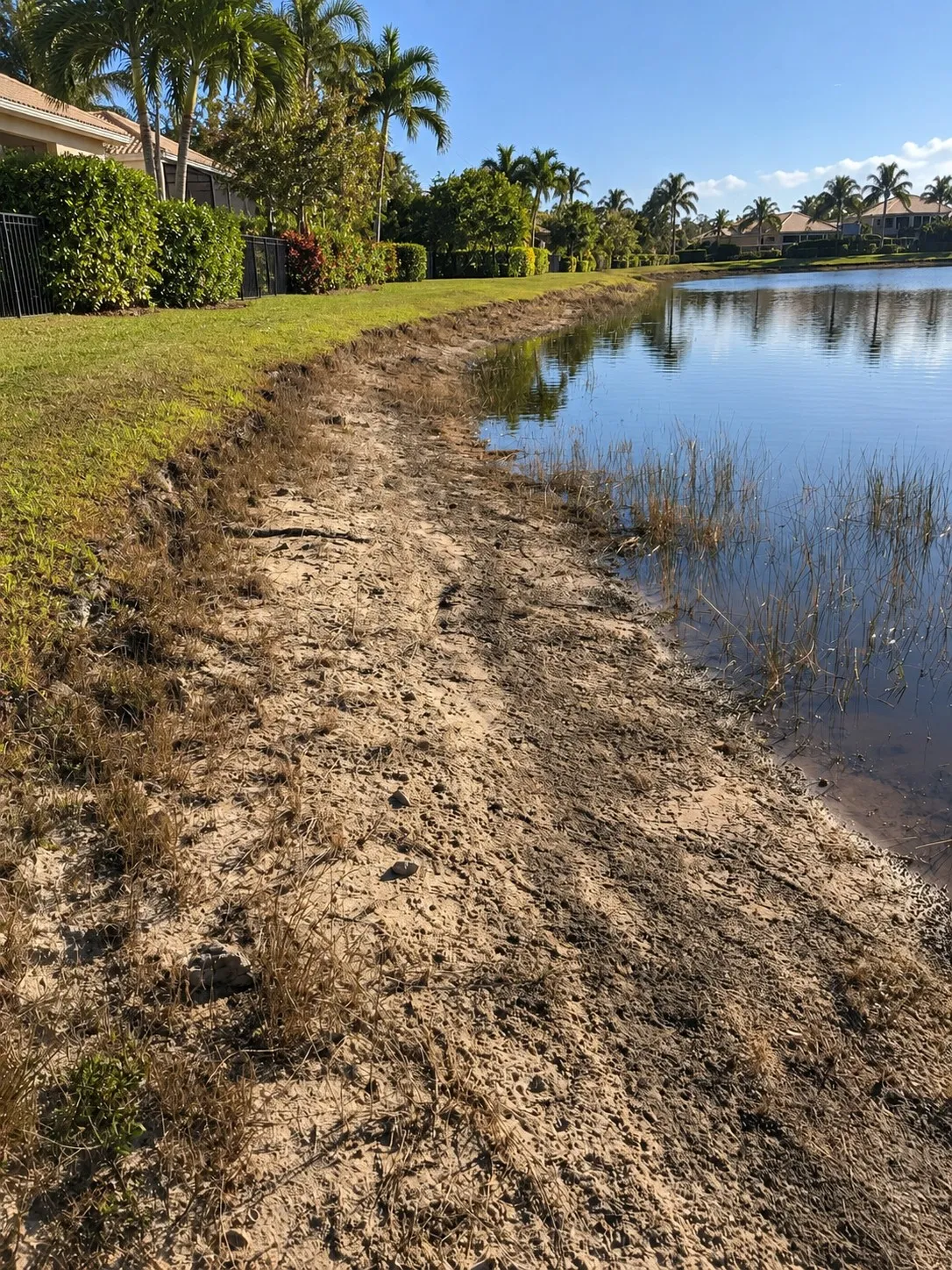 I am losing yard to the waterThe water rises and falls, and the grass along the edge dies back to bare sand.
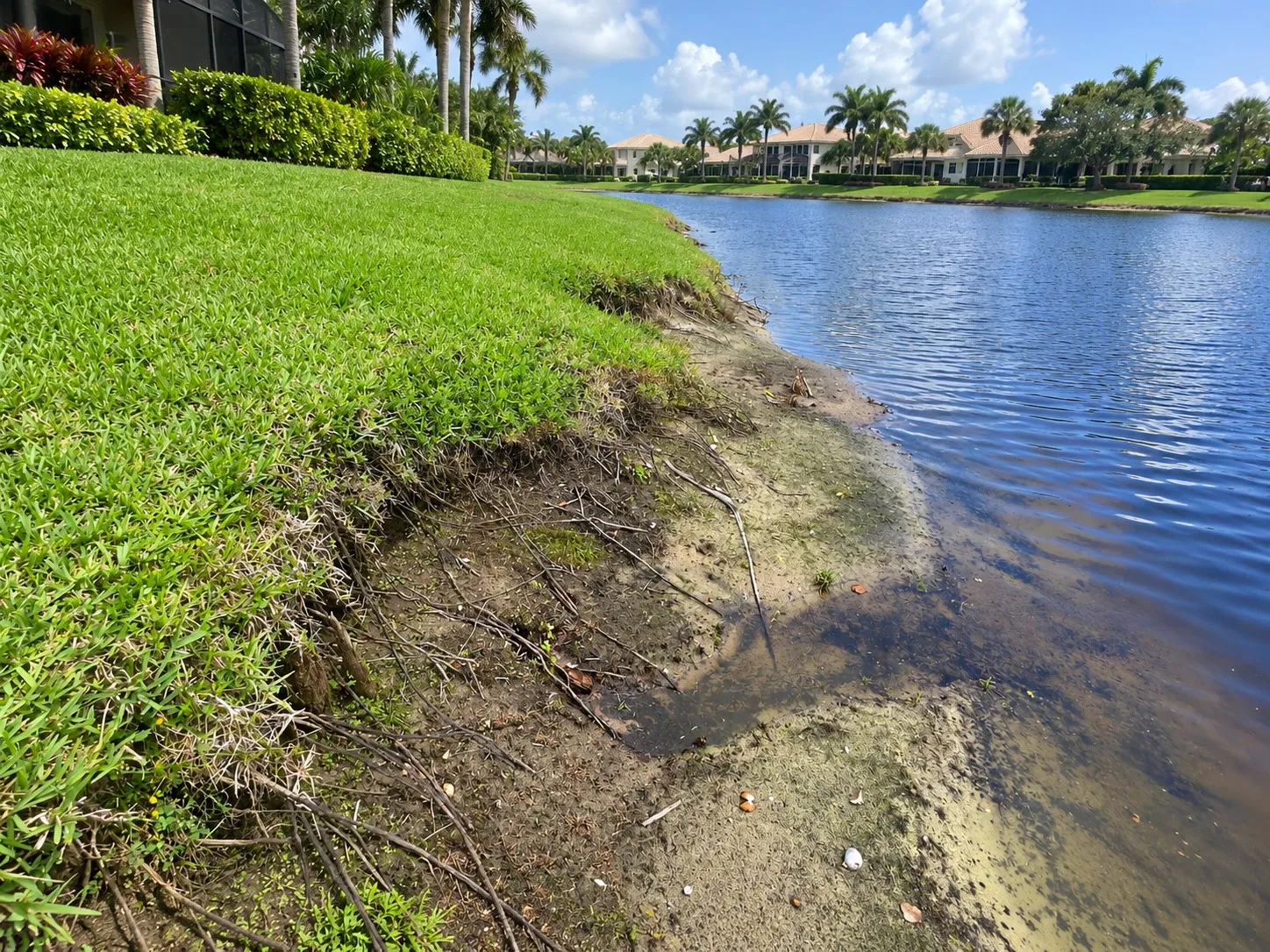 Someone could fall hereThe soil is gone from under the turf. Roots hang over the water.
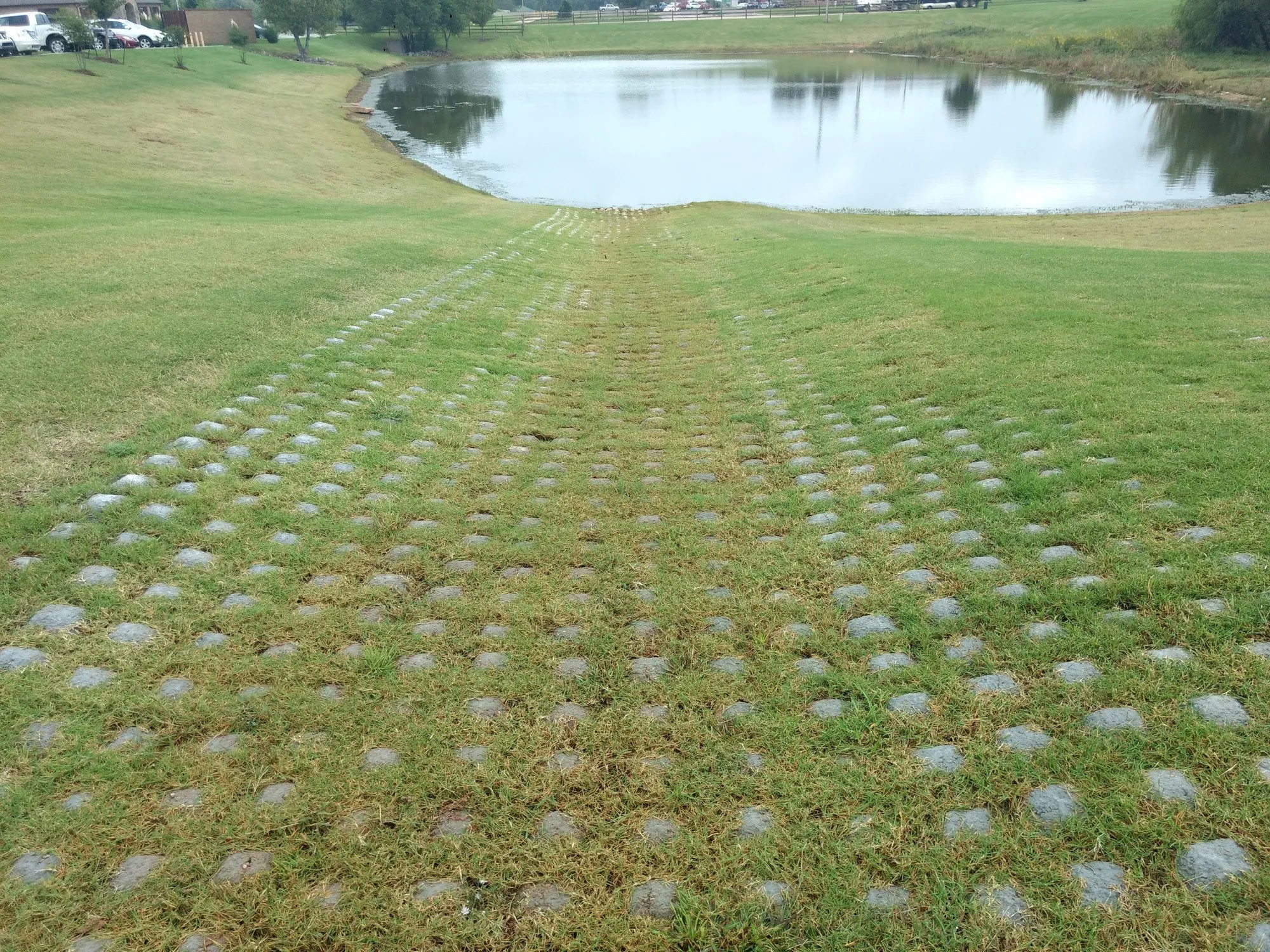
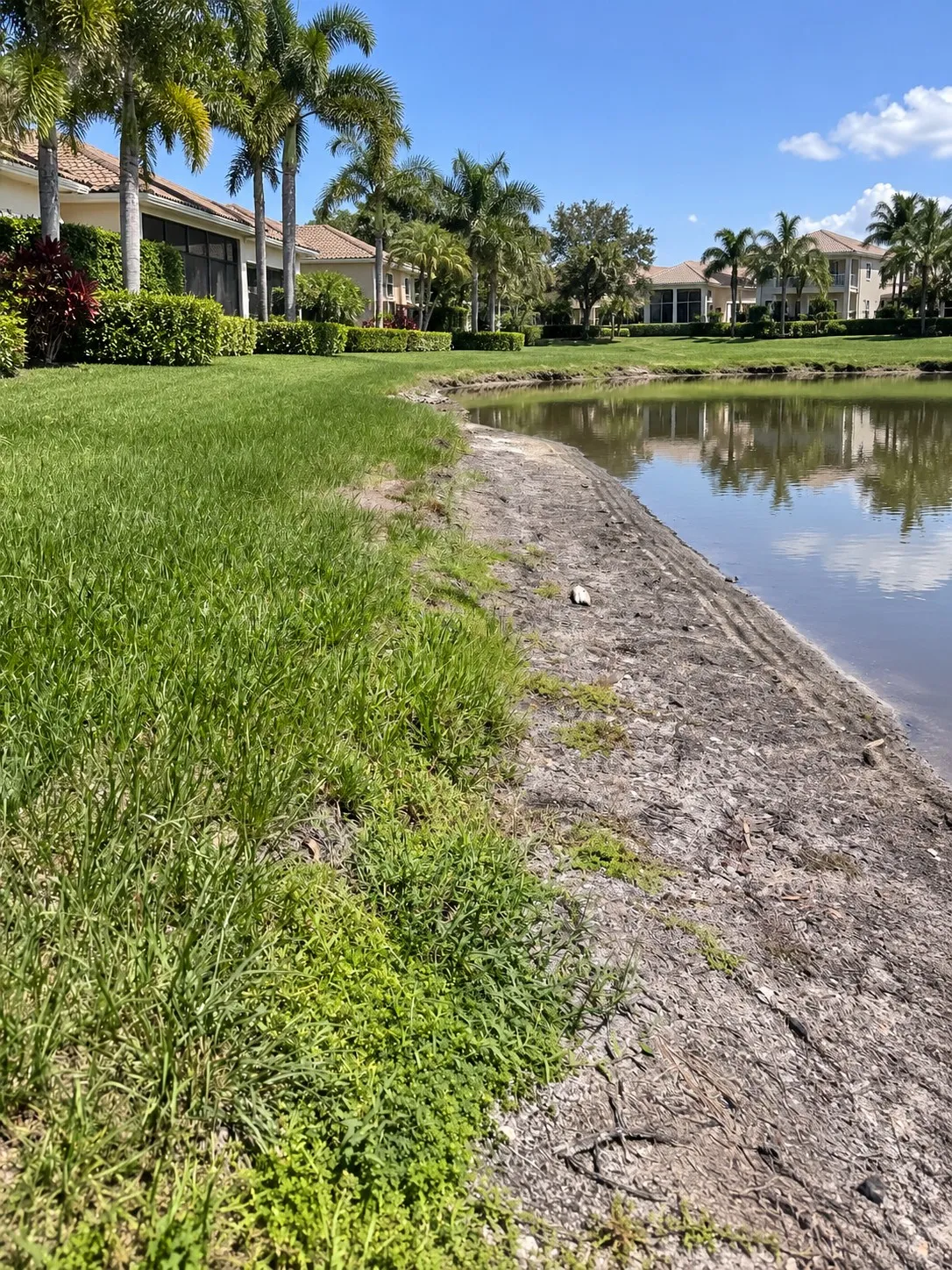 Rain is washing my bank awayRainwater runs across the lawn and strips the soil at the edge.
2Repair
How we build it
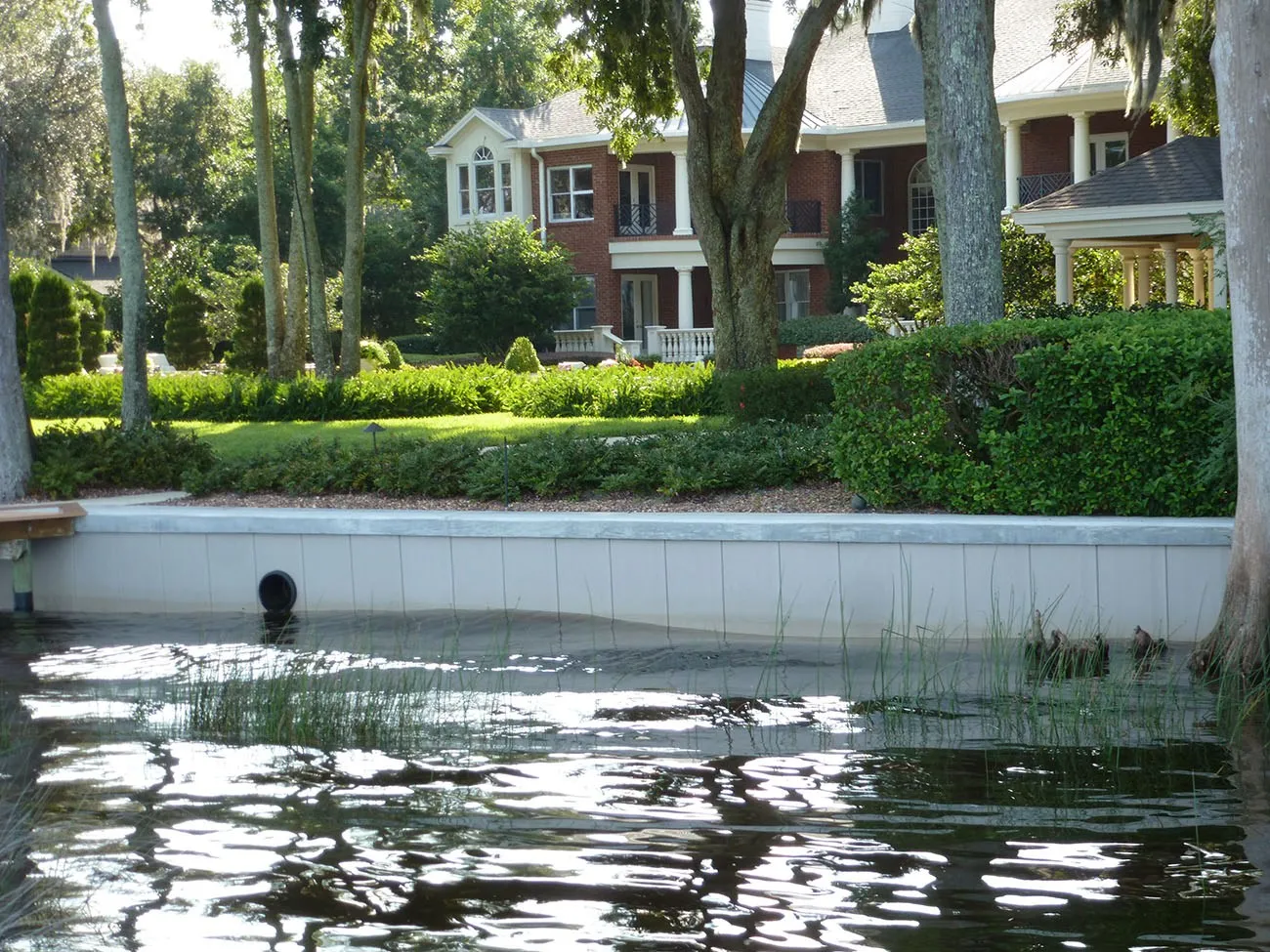
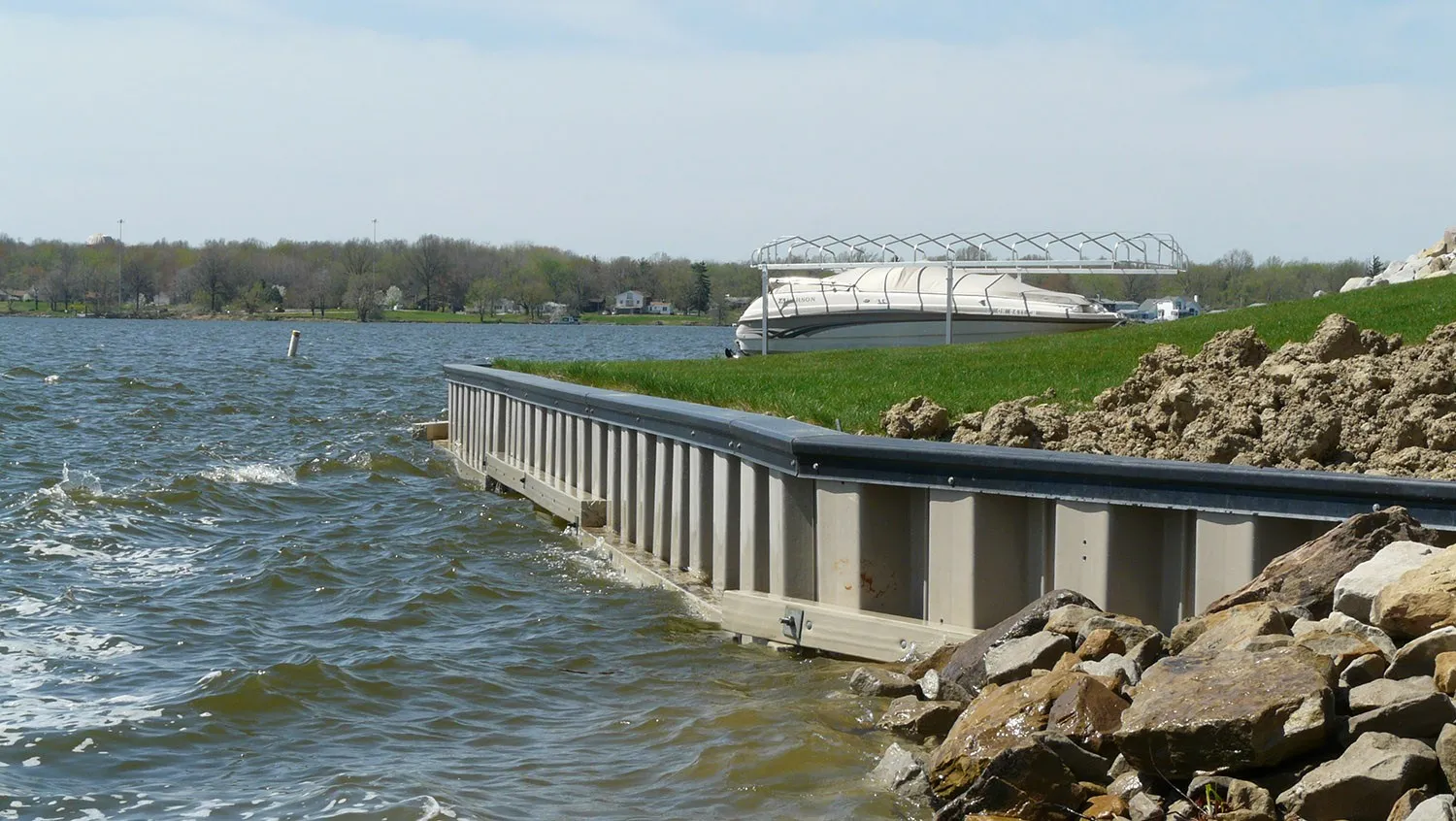
What goes into your wall
- Five-year workmanship warranty, in writing. The material is warranted by its manufacturer, on the manufacturer’s terms.
- Vinyl sheet piles driven into the ground side by side. Ours come from CMI under the name ShoreGuard.
- A concrete cap along the top, which ties the sheets together.
- A tie-back and a buried anchor (a deadman) that hold the wall to the soil behind it.
- Geotextile behind the sheets: water passes through, the soil stays.
- Florida Certified General Contractor CGC1513865. FDEP Stormwater and Erosion Inspector on the team.
3Estimate
Get your free online estimate
Takes about 20 seconds. Your price range arrives by email within 24 hours.
Rather talk? Call (954) 284-0812.
4Questions
Quick questions
What is a seawall?
A vertical wall that separates the water from the soil behind it. A sheet-pile wall is made of sheet piles driven into the ground side by side, with a cap along the top. Four wall materials are in use on South Florida canals: vinyl, concrete, steel and aluminum. We build mostly vinyl, with a concrete cap.
When is a wall the right answer?
Where there is no shelf under the water and the drop-off runs past five or six feet, a geotube is not the answer. That is sheet-pile work, and we will quote it that way. Also where the bank drops about four to five feet and sloping it would narrow a channel that has to stay open.
We would not recommend a wall where the problem is about six inches of erosion on a lake bank. A wall is a drop with no way back up, so where a slope is possible, that is a reason to prefer the slope.
My wall is cracking. Does it need replacing?
A crack is not a verdict on its own. A small, dry crack is commonly a repair item. Movement, a lean or soil going missing behind the wall commonly mean something more serious. Which of these you have is settled on the site visit, not from a photo.
One option leaves the old wall in place: a new vinyl wall built in front of an old concrete wall. The site visit decides whether it suits your wall.
Repairs we do ourselves: repairing or replacing the cap, new tie-backs and deadman anchors, filling voids behind the wall, sealing cracks and joints, weep holes and drainage behind the wall, riprap at the toe, and a new vinyl wall in front of the old one.
How long does it last?
We do not give a number of years for a wall. The manufacturer, CMI, states a 50-year warranty on its vinyl, in its own overview of sheet-pile applications (2022). That is the manufacturer’s warranty on the material, on the manufacturer’s terms, not a ShoreWorks promise, and a warranty period is not a service life.
What we put in writing: a five-year workmanship warranty on what we build.
How do seawalls fail?
Three common ways. Pressure behind the wall: water builds up in the soil and pushes the wall toward the canal, and missing or corroded anchors let it go. Soil leaving: soil that disappears behind a wall is leaving somewhere, commonly under the wall or through a crack. Cracks in concrete: a crack in a concrete wall is a path for soil. On the site visit we walk the wall and look for a lean or a bulge, gaps, missing soil behind the wall, and cracks.
Do I need a permit?
Up to four levels of approval can apply to a seawall: a city building permit, a county approval, the Florida Department of Environmental Protection and, on navigable water, the U.S. Army Corps of Engineers. Which of them apply varies by city and county, and we confirm it for your address. Where an authority asks for drawings sealed by an engineer, the proposal says who provides them.
What does it cost?
Most jobs fall between $50,000 and $500,000. The realistic minimum is about $10,000. Four things move the price: equipment access, permits, the depth and condition of the lake bottom, and the length of shoreline. The online estimate gives you a range, not a quote, within 24 hours.
Can you tell from photos which method fits?
No. Photos help us prepare, but the site visit decides the method. We do not recommend a method from a photo or from a calculator. The site visit for one lake is free, and we come within 7 days (usually sooner).
Who are you?
ShoreWorks LLC, Florida Certified General Contractor CGC1513865. We work in 21 counties of South and Central Florida, and we give a five-year workmanship warranty in writing.
5Other solutions
Not every bank needs this
We also install these. The site visit decides which one fits.