Home · Technology · Geotube
1Problem
Geotube shoreline repair in South and Central Florida
Lost part of your yard to the lake? We rebuild the bank with a geotube and put sod back to the water’s edge.
Get my free online estimateTakes about 20 seconds · no site visit needed · or call (954) 284-0812
Is this your shoreline?
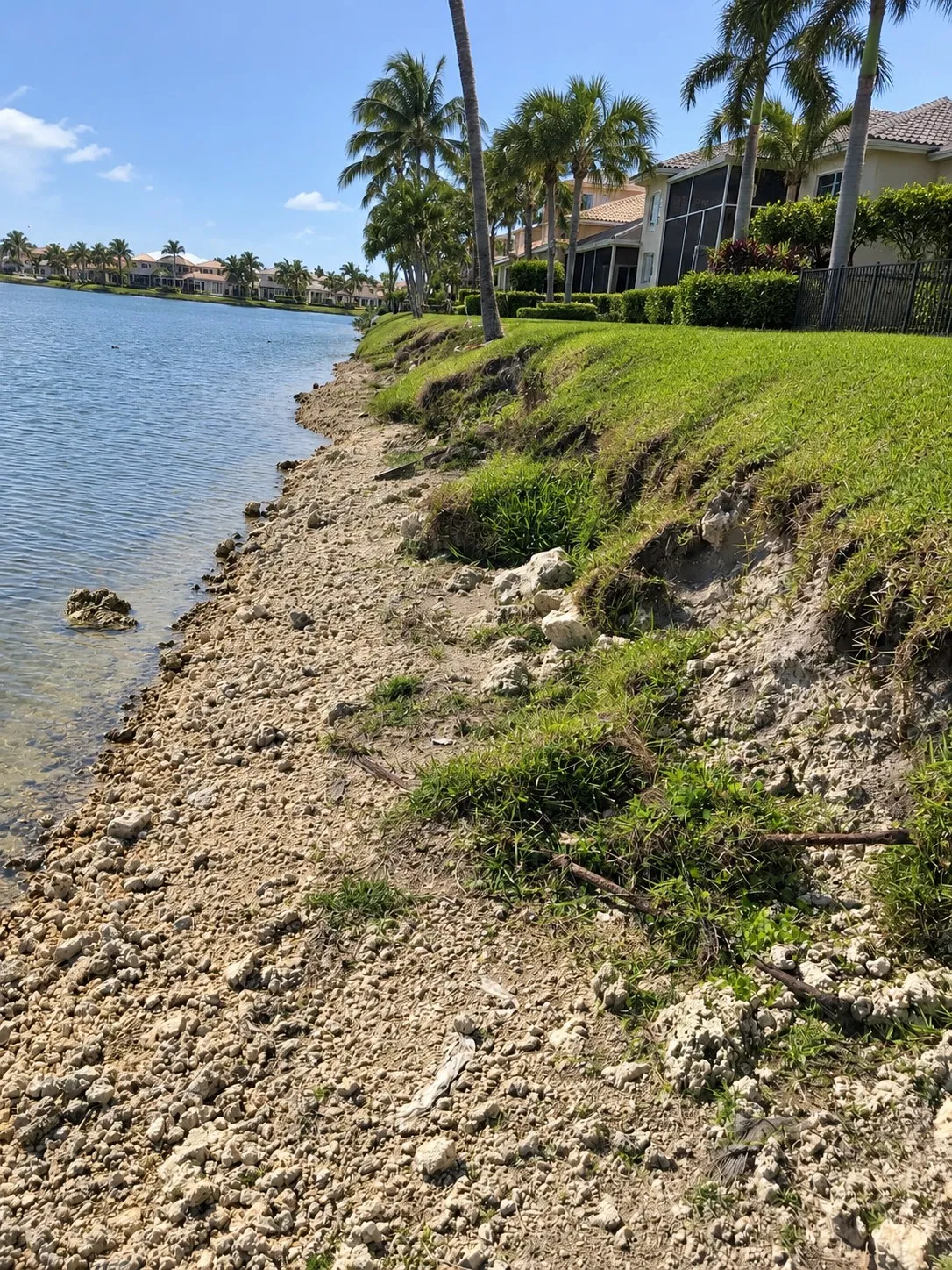 My bank is erodingWaves wash the soil out of the edge, and the bank breaks away.
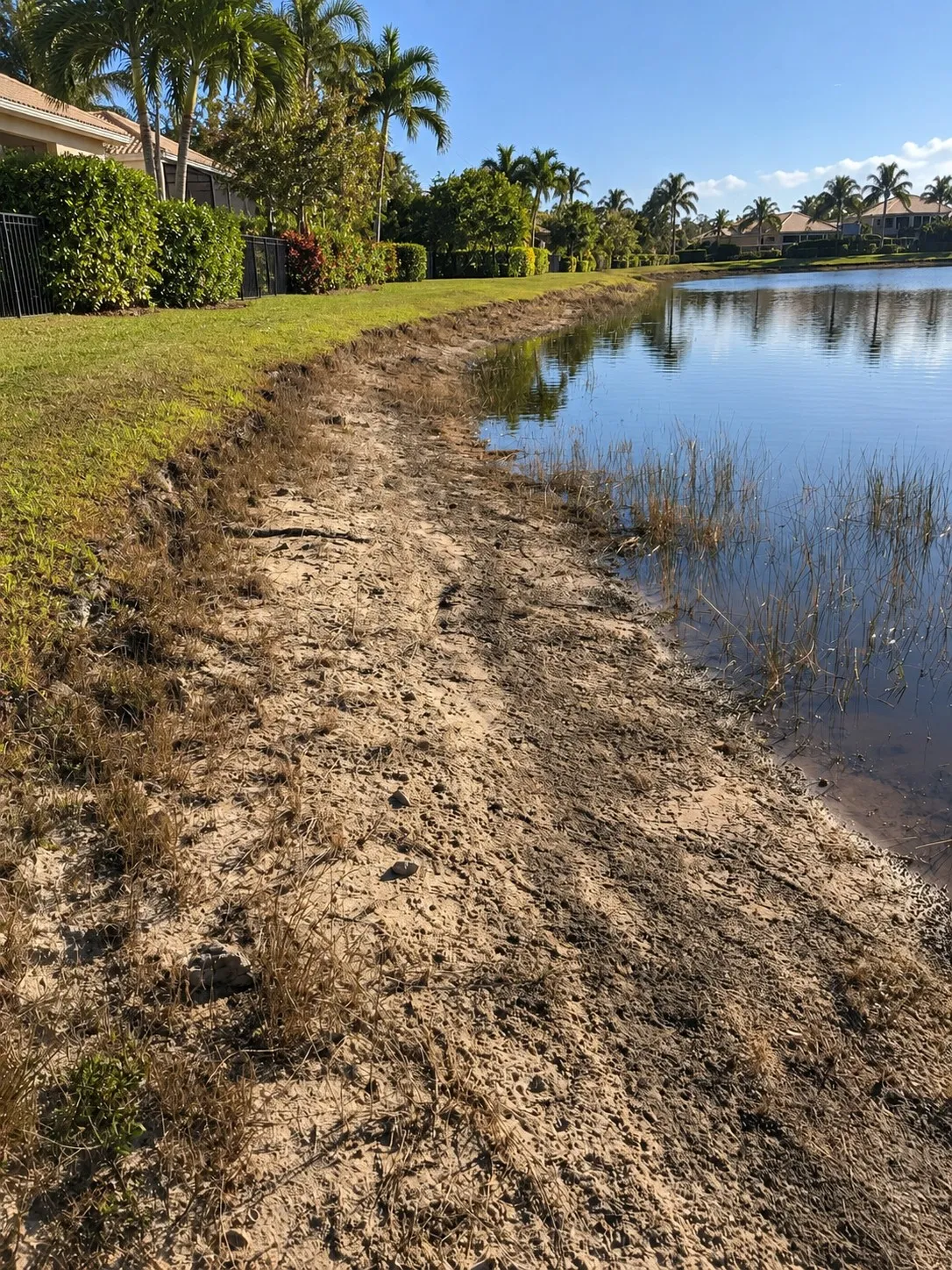 I am losing yard to the waterThe water rises and falls, and the grass along the edge dies back to bare sand.
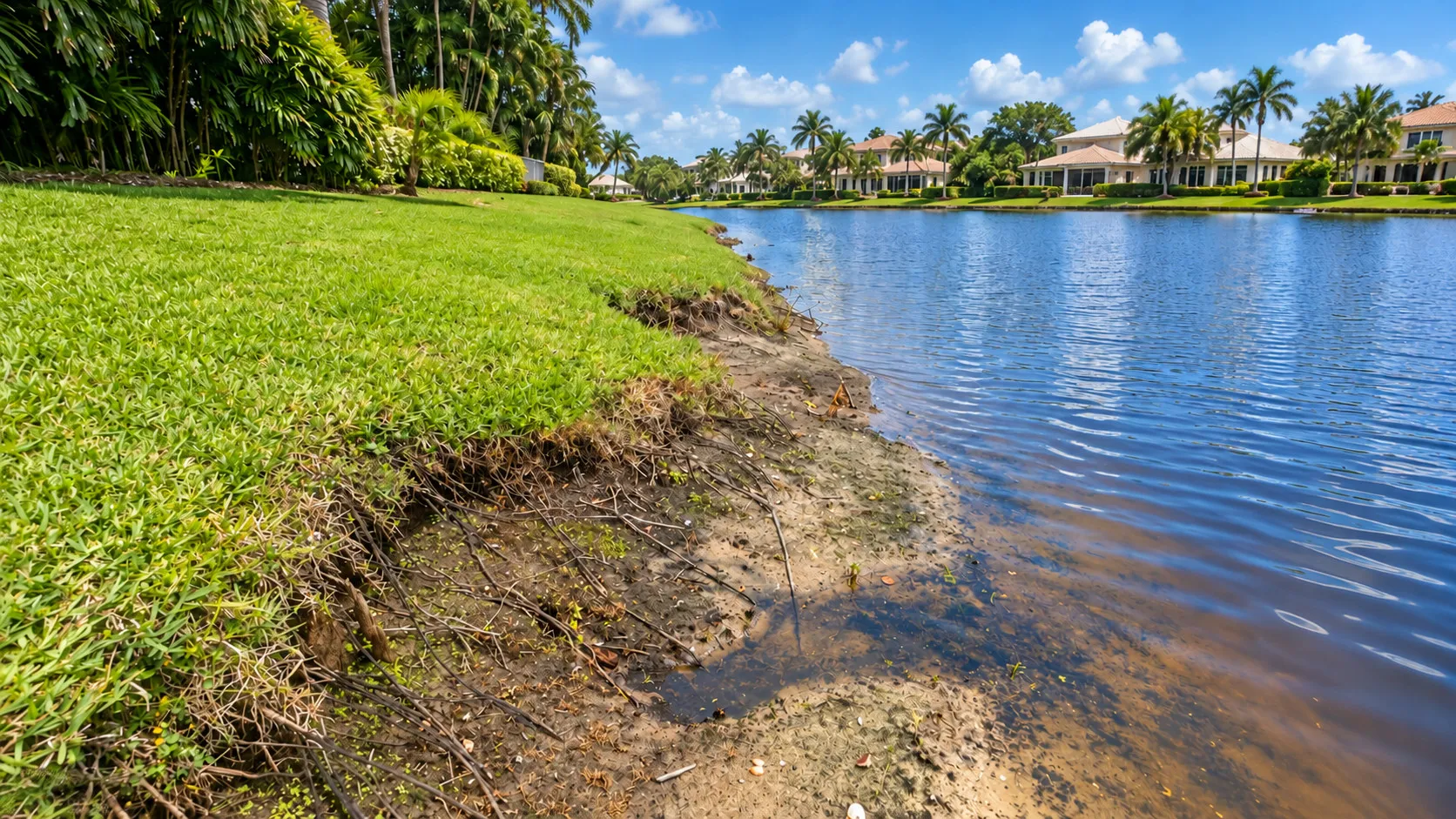
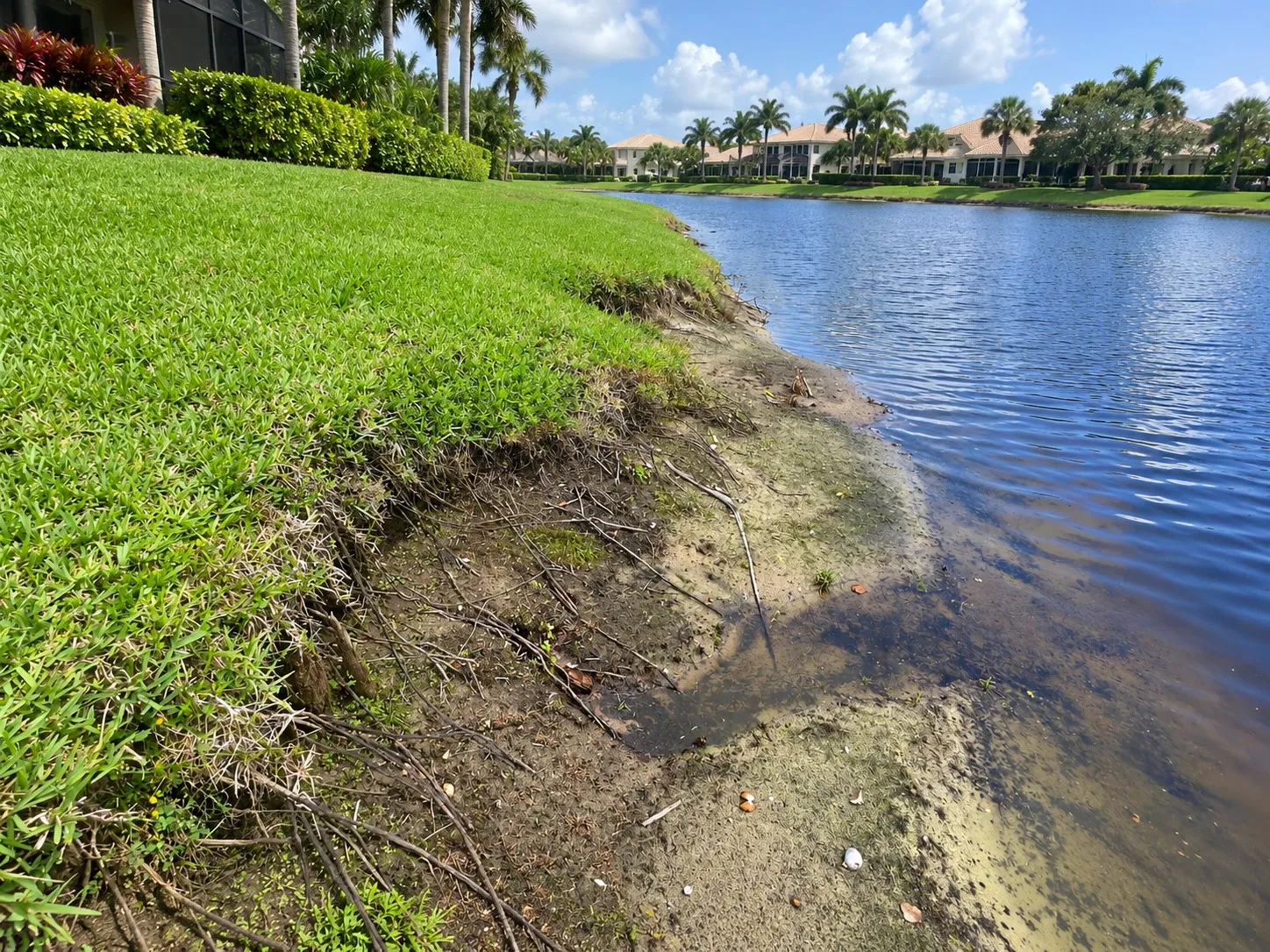 Someone could fall hereThe soil is gone from under the turf. Roots hang over the water.
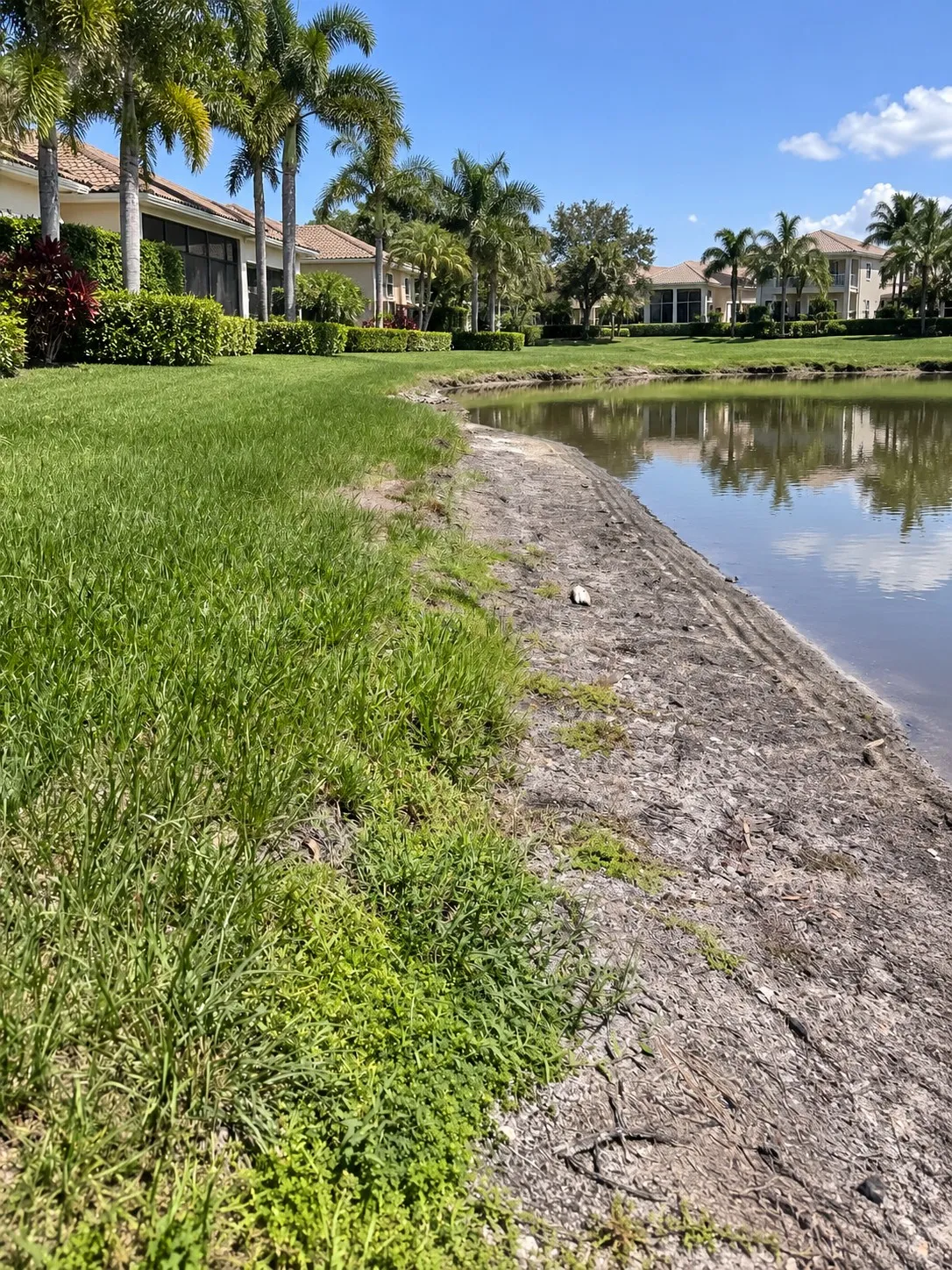 Rain is washing my bank awayRainwater runs across the lawn and strips the soil at the edge.
2Repair
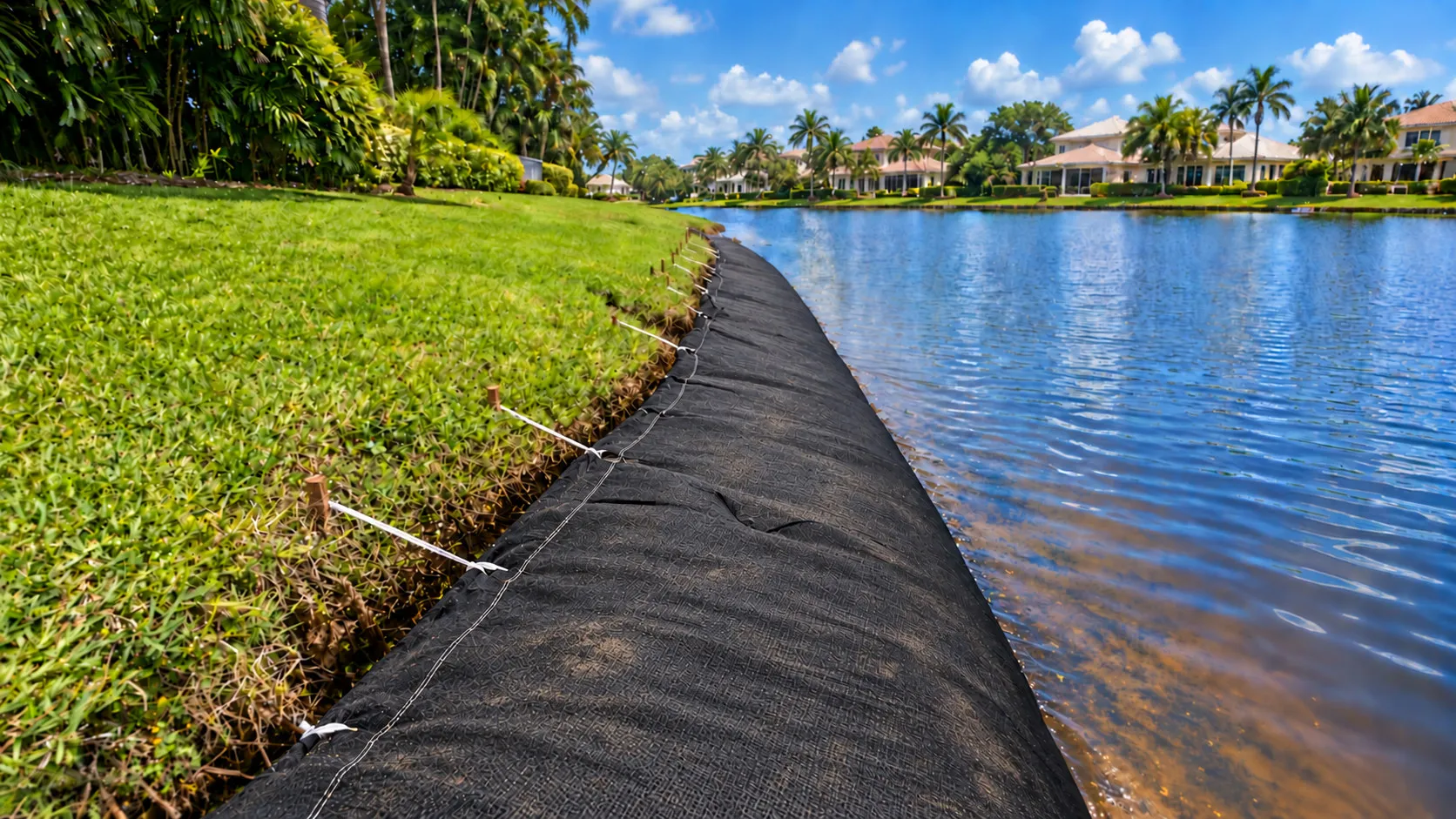
Before, during and after
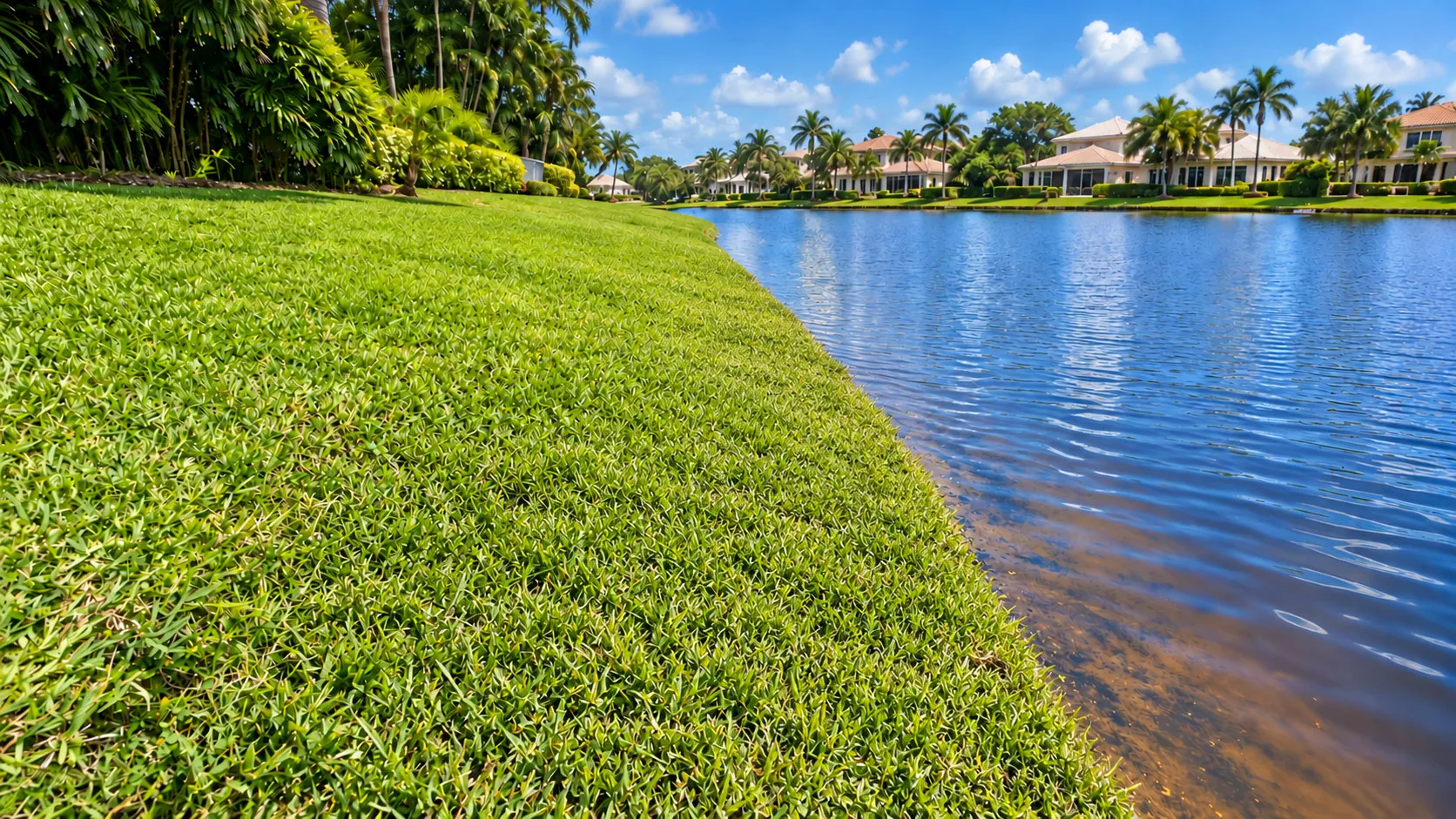
What goes into your bank
- Five-year workmanship warranty, in writing.
- Mirafi® FW404 tube fabric: woven polypropylene from Solmax (formerly TenCate). By its data sheet it keeps 90% of its strength after 500 hours of UV in a laboratory test.
- A nonwoven overlay, Mirafi® 140N, over the tube on every job.
- Set to a laser level, so the edge runs straight along your shoreline.
- No fabric left in the sun: sand, a coconut erosion blanket and sod down to the water’s edge.
- Florida Certified General Contractor CGC1513865. FDEP Stormwater and Erosion Inspector on the team.
- 20+ years
- The City of Miramar installs geotubes on residential lake banks. It says they “normally last upwards of twenty (20) years if properly maintained”.
- Since the 1990s
- Large geotextile containers were built into a dune at Atlantic City in the mid-1990s. Their distributor reports that they performed as designed in Superstorm Sandy in 2012.
3Estimate
Get your free online estimate
Takes about 20 seconds. Your price range arrives by email within 24 hours.
Rather talk? Call (954) 284-0812.
4Questions
Quick questions
What is a geotube?
A large sleeve of woven geotextile. We fill it with a slurry of sand and water. The water drains out through the fabric and the sand stays inside. Sand, a coconut erosion blanket and sod go on top, so no fabric is left showing.
How is it built?
A base tube, set to a laser level, carries the bank. A second tube on top is cut open once it is full: its sand is spread into the slope and its fabric is folded back over the edge, so that no fabric faces the sun. A coconut erosion blanket and sod finish it, from the water’s edge up to your lawn.
- Base tube
- Sand
- Coconut erosion blanket
- Sod, to the water’s edge
Where the water is deeper, we stack tubes like stairs. Where the bank calls for it, we can also place a riprap toe in front of the base tube, or anchor the toe.
When is a geotube the right answer?
Three things decide it: how high the drop-off is, whether there is a flat shelf under the water for the tube to sit on, and whether the lake has a structure that holds the water level steady.
We would not recommend a geotube where the level swings about two feet or more between the rainy and the dry season, or where there is no shelf and the drop-off runs past five or six feet. That is sheet-pile work, and we will quote it that way.
How long does it last?
We do not promise a number of years. Sunlight on bare fabric is what ends a geotube; covered by sand and sod, or under water, the fabric is out of the sun.
The City of Miramar installs geotubes on residential lake banks through its own program. It states that they “normally last upwards of twenty (20) years if properly maintained”, and it requires residents to keep the tube covered with grass.
What we put in writing: a five-year workmanship warranty, and no handover until the sod has rooted.
What can go wrong?
Three things. Bare fabric: sod dies at the waterline, the fabric shows, and the sun does the rest. The wrong fill: lake muck washes out through the fabric and the tube settles. A cut at the waterline: a landscaper’s edger, or a boat, can slice the face of the tube.
Our answers: no fabric faces the sun on the day we finish, we fill with clean sand, and your landscaping crew gets a one-page guide and a walk-through at handover. Why geotube installations fail
How long does a geotube repair take?
With good access, the build takes about one working day per 100 feet of bank, once the permit is in place. Site conditions can change that. The sod then needs two to three weeks to root before we hand over.
Do I need a permit?
Which rules apply depends on where the lake is. We prepare the permit paperwork and we file it, and the proposal says which permit your lake needs.
What does it cost?
Most jobs fall between $50,000 and $500,000. The realistic minimum is about $10,000. Four things move the price: equipment access, permits, the depth and condition of the lake bottom, and the length of shoreline. The online estimate gives you a range, not a quote, within 24 hours.
Who are you?
ShoreWorks LLC, Florida Certified General Contractor CGC1513865. We work in 21 counties of South and Central Florida, and we give a five-year workmanship warranty in writing.
5Other solutions
Not every bank needs a geotube
We also install these. The site visit decides which one fits.