Home · Technology · Flexamat
1Problem
Flexamat concrete block mats in South and Central Florida
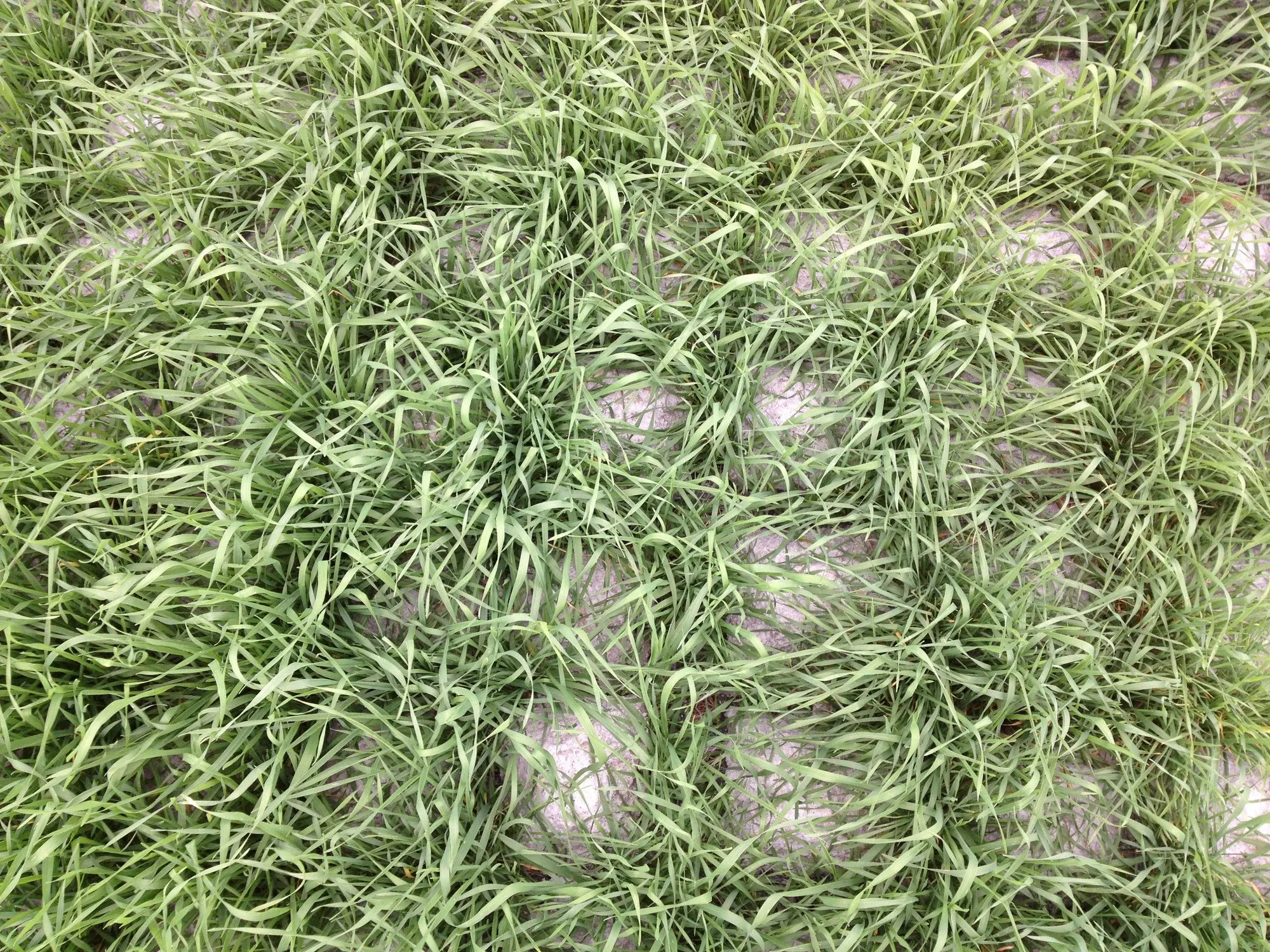
A carpet of concrete blocks, unrolled over the prepared bank. Grass grows up through it, and the concrete is still there.
Get my free online estimateTakes about 20 seconds · no site visit needed · or call (954) 284-0812
Is this your shoreline?
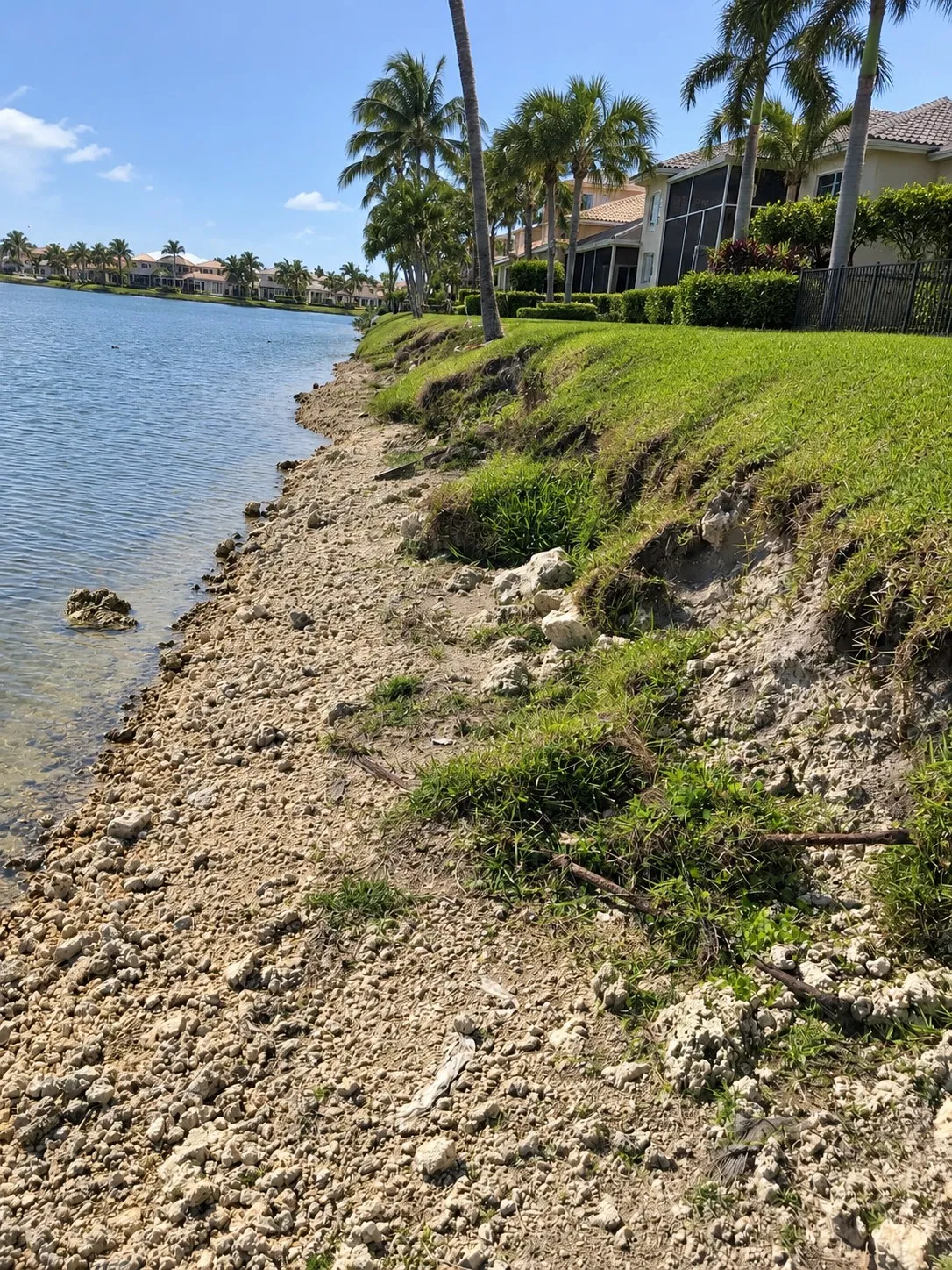 My bank is erodingWaves wash the soil out of the edge, and the bank breaks away.
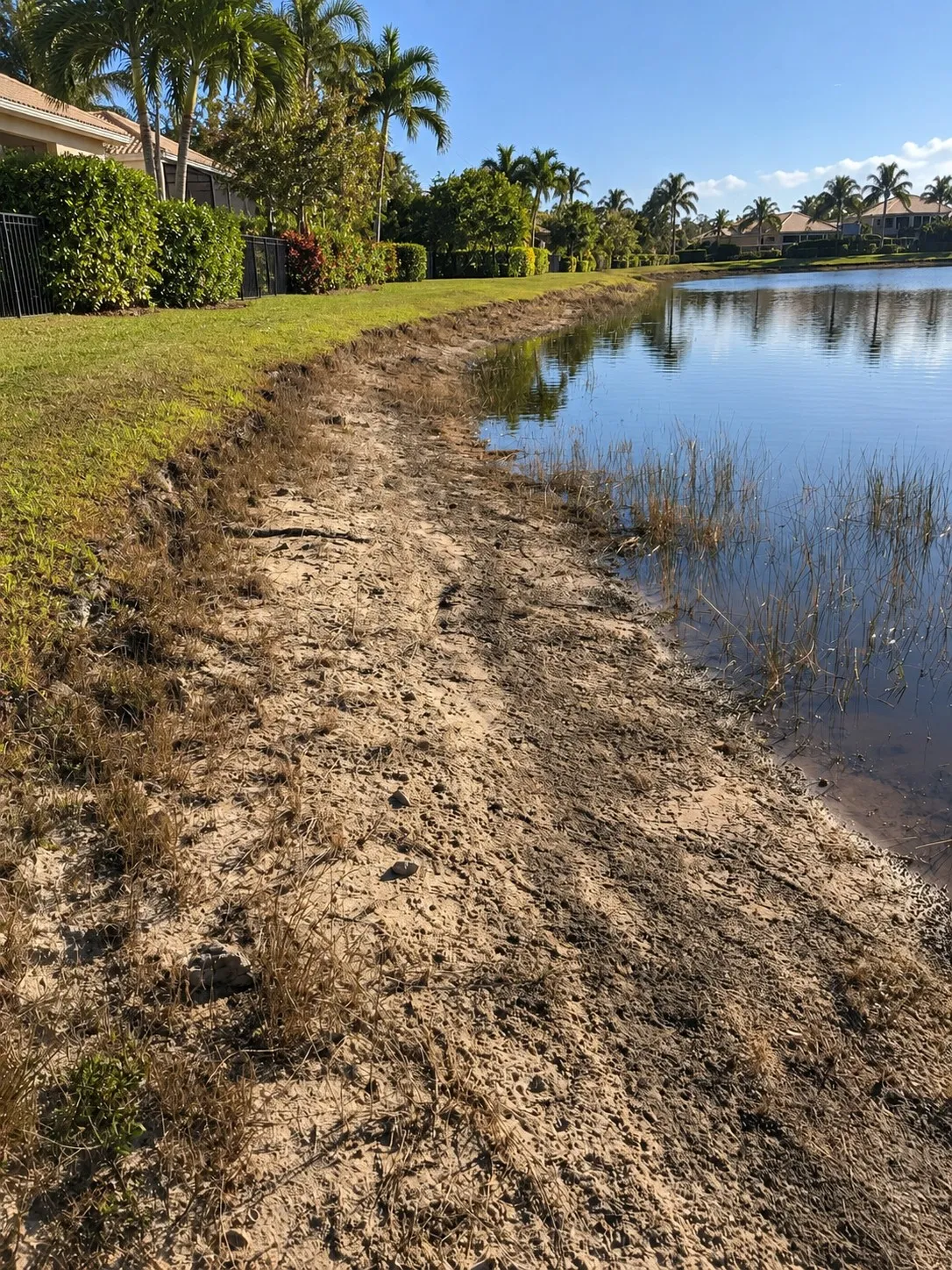 I am losing yard to the waterThe water rises and falls, and the grass along the edge dies back to bare sand.
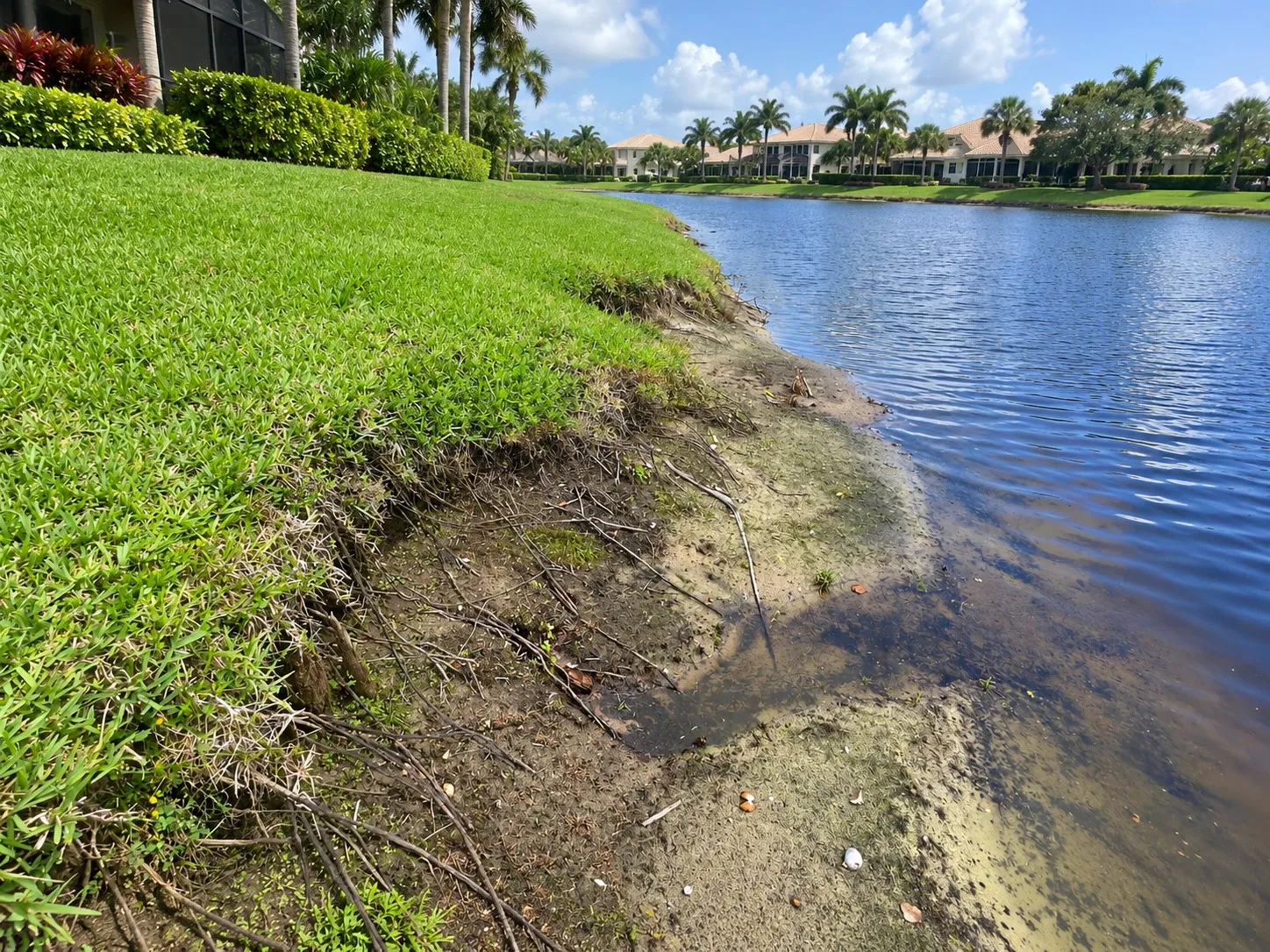 Someone could fall hereThe soil is gone from under the turf. Roots hang over the water.
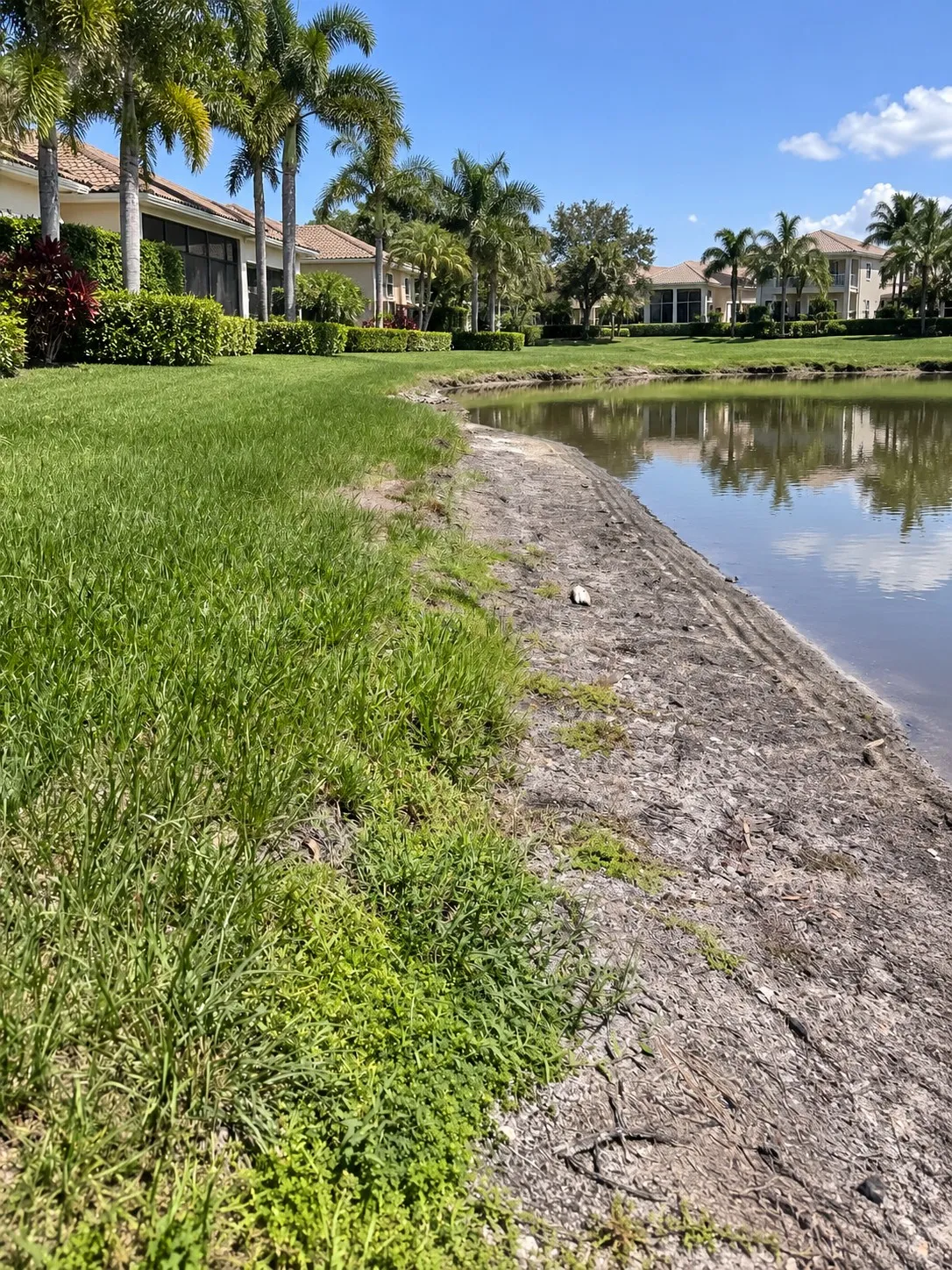 Rain is washing my bank awayRainwater runs across the lawn and strips the soil at the edge.
2Repair
How we build it
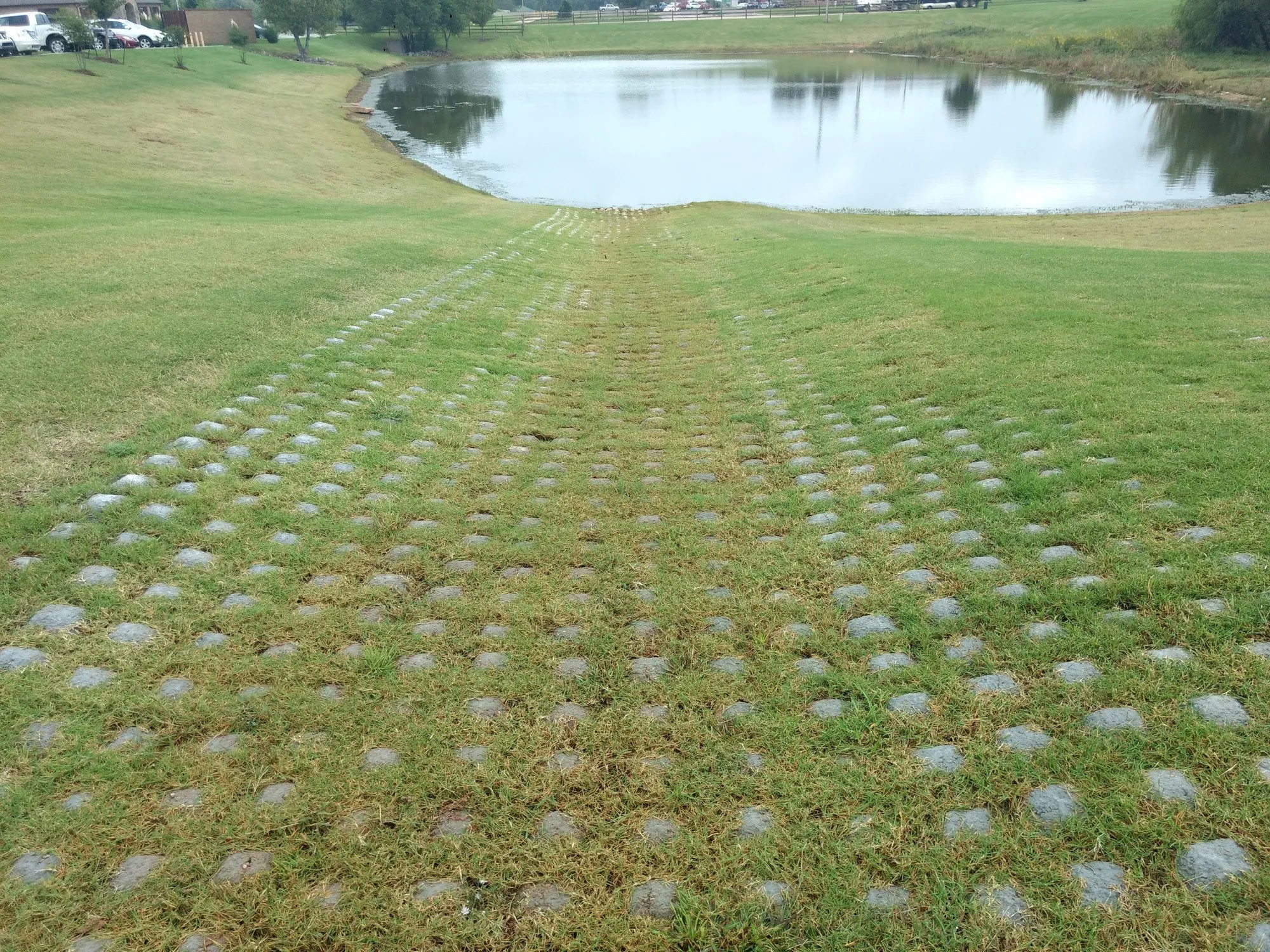
What goes into your slope
- Five-year workmanship warranty, in writing.
- Flexamat by Motz Enterprises: small concrete blocks tied together with a polypropylene geogrid, with the underlayment inside the roll. Which of the manufacturer’s four types we lay depends on the job.
- A shaped, smooth, compacted base: compacted limerock or compacted soil, with nothing under the mat that lifts a block more than 3/4 inch.
- Grass grows up through the gaps between the blocks.
- Edges trenched in at the top, at the toe and on the sides on every job, and the mat anchored.
- Florida Certified General Contractor CGC1513865. FDEP Stormwater and Erosion Inspector on the team.
3Estimate
Get your free online estimate
Takes about 20 seconds. Your price range arrives by email within 24 hours.
Rather talk? Call (954) 284-0812.
4Questions
Quick questions
What is Flexamat?
A mat of small concrete blocks that comes to the site as a roll. It is unrolled over the prepared bank like a carpet. Grass grows up through the gaps between the blocks, and the concrete is still there. The concrete stays visible, and more of it shows when the water level drops.
Where does it fit?
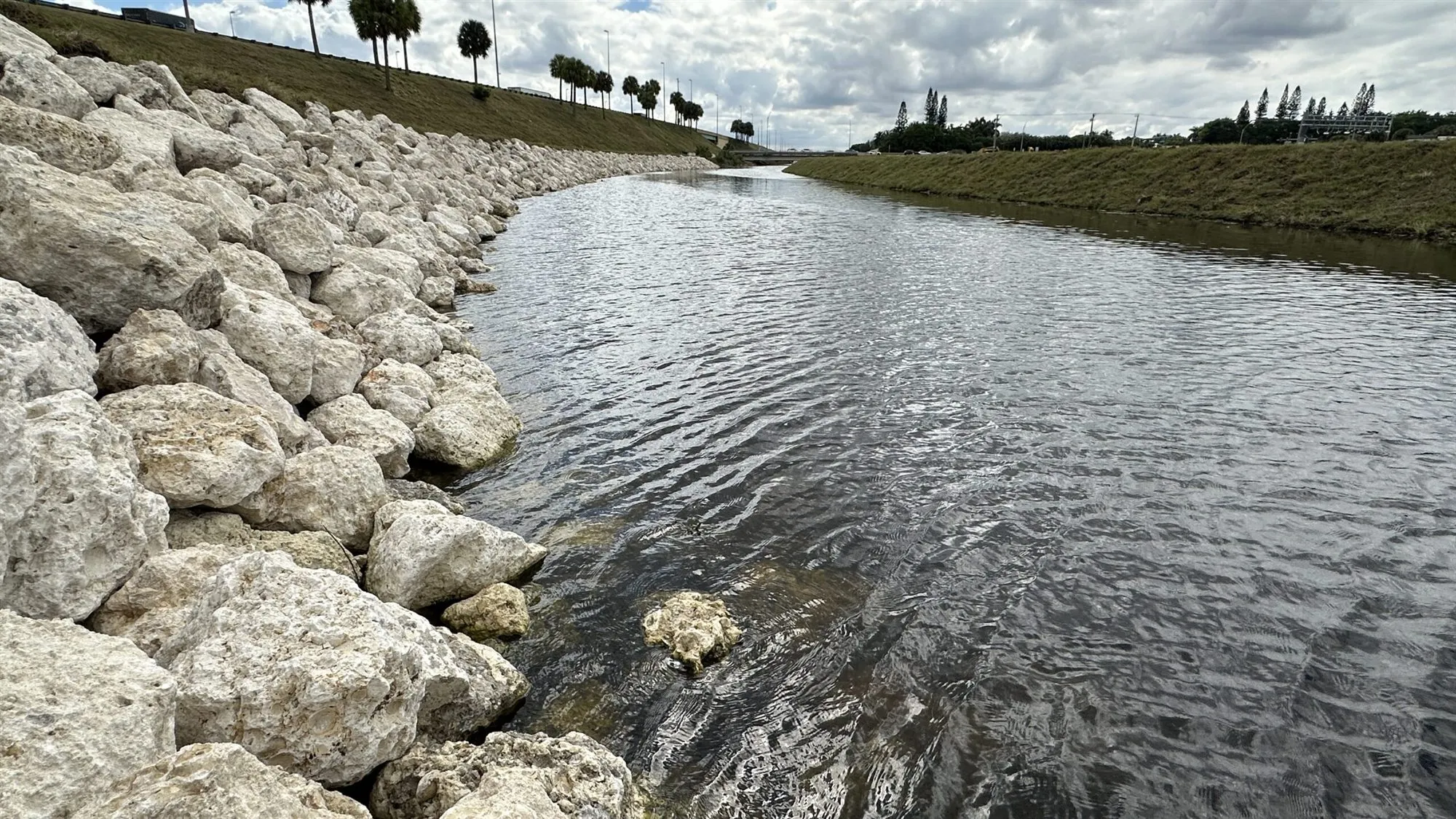
The manufacturer lists channels and swales that carry stormwater, pipe outfalls and inlets, canal banks, slopes under bridges, and shorelines, against erosion from waves and from burrowing animals.
It needs a shaped slope and a machine that can reach the bank: it is excavator work. We would not recommend it on a steep drop-off, because a collapsed bank has to be rebuilt first, or where a machine cannot reach the bank.
Will we see the concrete? Can it be mowed?
The blocks show between the grass, and more of them show when the water drops. It can be mowed: the manufacturer says “Commercial mowers may be used over Flexamat”, and its maintenance guide treats mowing as routine once the area is stabilized.
How long does it last, and what does it need?
We do not promise a number of years. The manufacturer’s specification and installation guide state no design life in years and no warranty term, so we state none either. What decides it is the ground under the mat and the edges around it.
Upkeep, as the manufacturer lists it: mowing is routine once the area is stabilized, do not spray a non-selective weed or grass killer on it, repair rills and gullies at the edges, and keep bare soil beside the mat seeded.
What we put in writing: a five-year workmanship warranty.
How can a block mat fail?
It starts in the ground under the mat or at its edges. Water gets under the mat and lifts it, or washes the soil out from beneath it. An edge that was not trenched in gets undermined. A base that was not compacted lets the mat settle. That is why we trench the edges in on every job and ask for a smooth, firm base.
How is it different from a geotube bank?
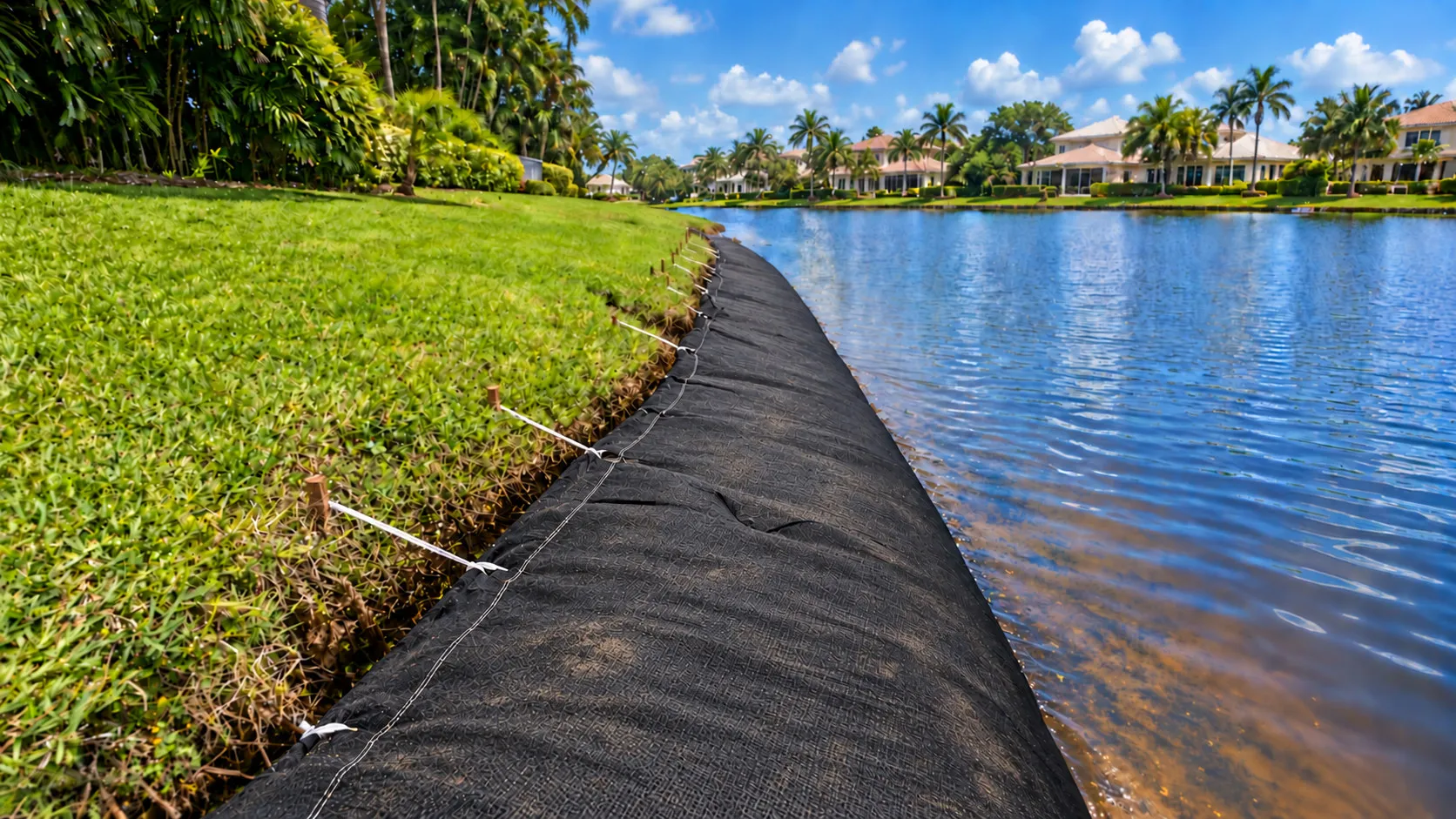
A geotube is a sleeve of woven fabric filled with sand, with sand and sod over it. Flexamat is a mat of concrete blocks with grass growing through it. A Flexamat bank runs as a continuous slope into the water, while a geotube bank has a rounded bullnose at the waterline.
How long does the work take, and do I need a permit?
It is excavator work. About 100 feet of bank takes roughly two to three working days, from shaping the base to the laid mat, depending on site conditions. The schedule for your bank is in the proposal.
Which rules apply depends on where the bank is. We prepare and file the paperwork, and the proposal says which permit your site needs and how long it should take. The permit sets the sediment controls.
What does it cost?
Most jobs fall between $50,000 and $500,000. The realistic minimum is about $10,000. Four things move the price: equipment access, permits, the depth and condition of the lake bottom, and the length of shoreline. The online estimate gives you a range, not a quote, within 24 hours.
Can you tell from photos which method fits?
No. Photos help us prepare, but the site visit decides the method. We do not recommend a method from a photo or from a calculator. The site visit for one lake is free, and we come within 7 days (usually sooner).
Who are you?
ShoreWorks LLC, Florida Certified General Contractor CGC1513865. We work in 21 counties of South and Central Florida, and we give a five-year workmanship warranty in writing.
5Other solutions
Not every bank needs this
We also install these. The site visit decides which one fits.