1Signs
What you see, and what it usually means
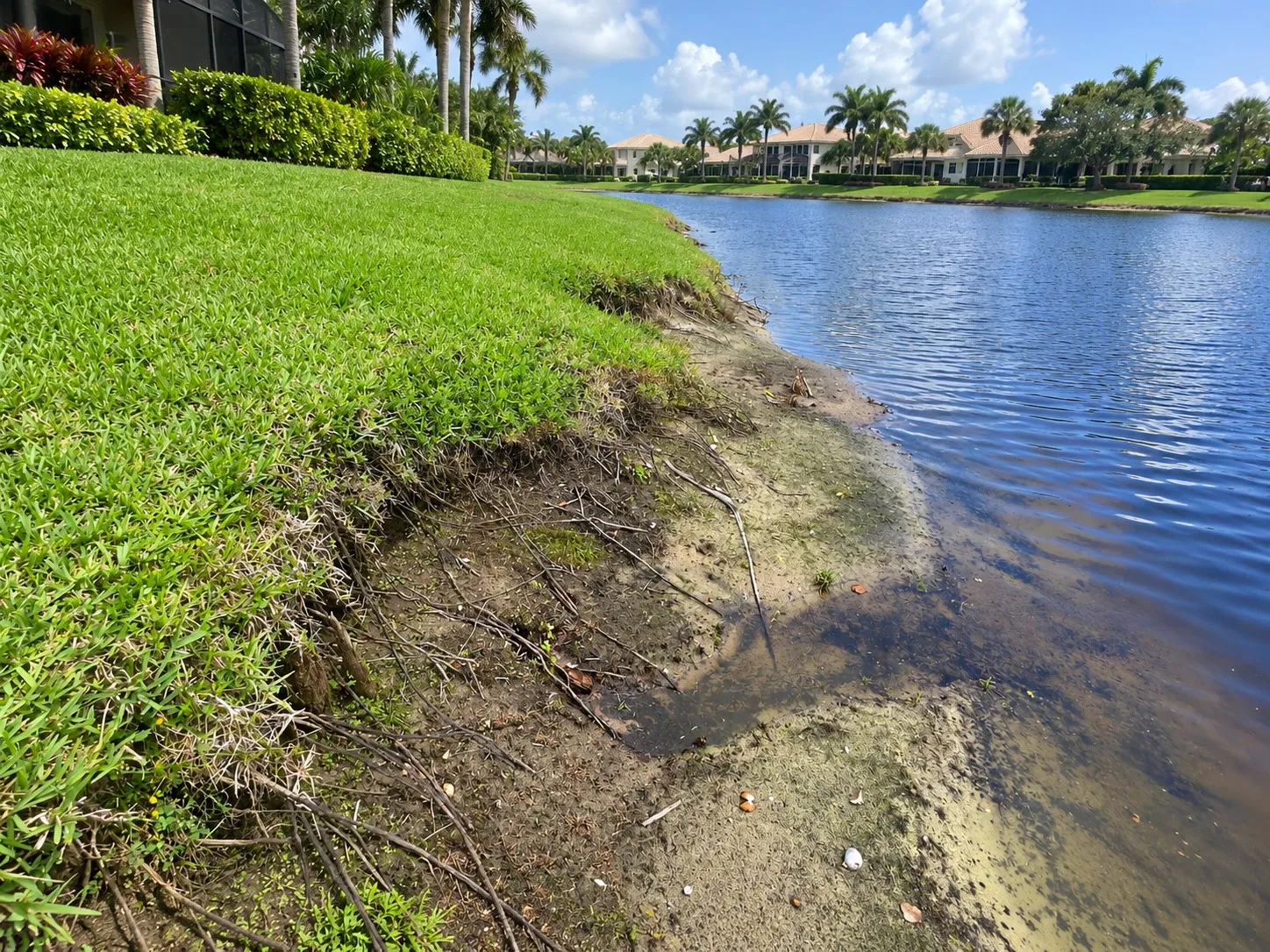
You see: a step-off at the edge where people walk, mow or fish.
It usually means: the bank has broken away at the waterline and left a vertical step. The step is a drop-off: the place where erosion has taken the soil away. It can be one foot high, or four.
How big the drop-off is sets the size of the repair. Some banks also drop straight into deep water with no ledge under the surface. That changes the method, not just the price: a geotube needs a shelf to sit on.
2Options
Four ways to repair it
We install all four. The site visit decides which one fits your bank, not a photo.
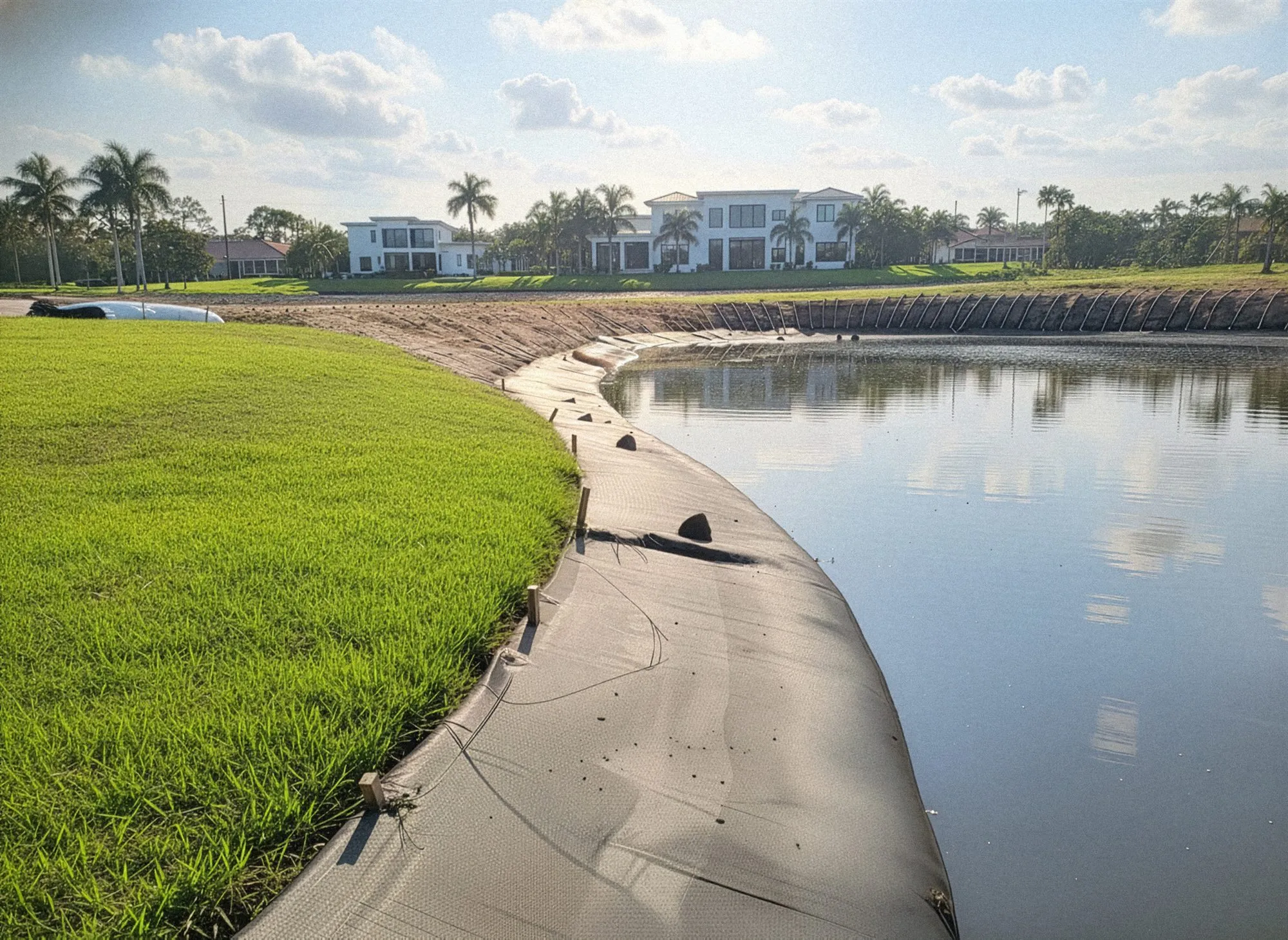 Geotube A sleeve of woven geotextile, filled with sand, that rebuilds the edge of the bank. Sod covers it down to the water.
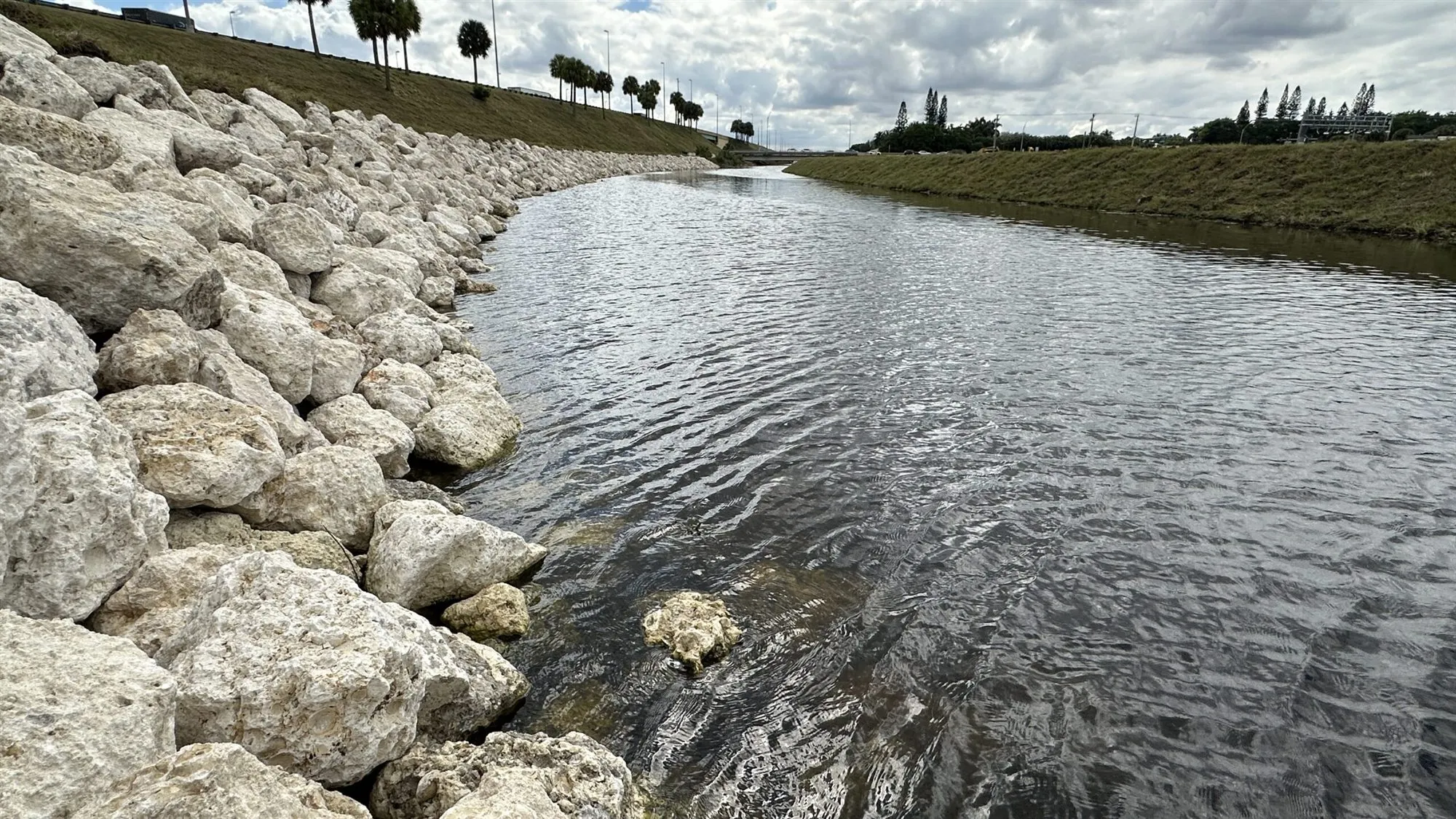 Riprap Stone laid on a shaped slope over filter fabric. The fabric keeps the soil from washing out between the stones.
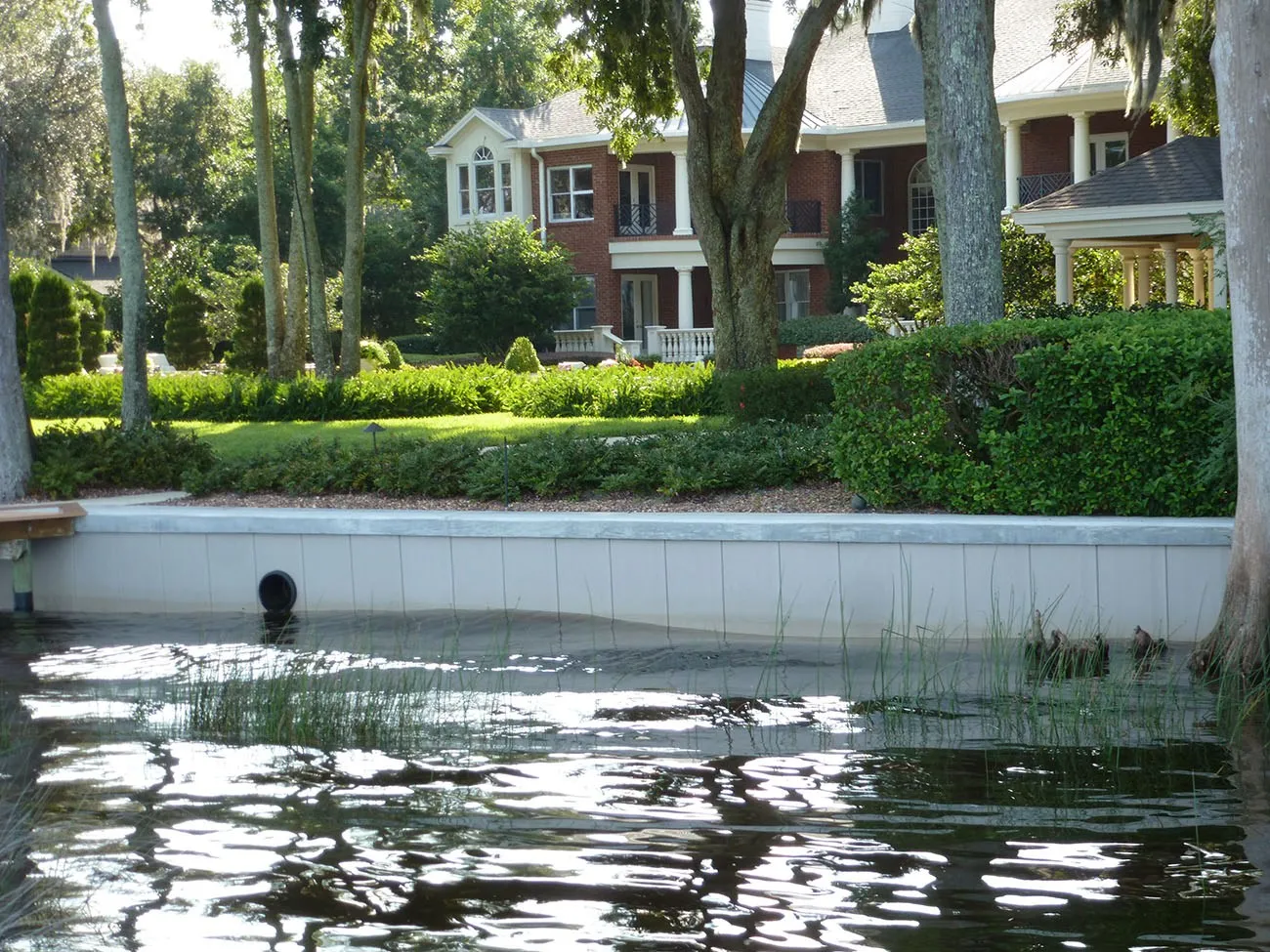 Seawalls Vinyl sheet piles driven side by side, with a concrete cap that ties the tops together.
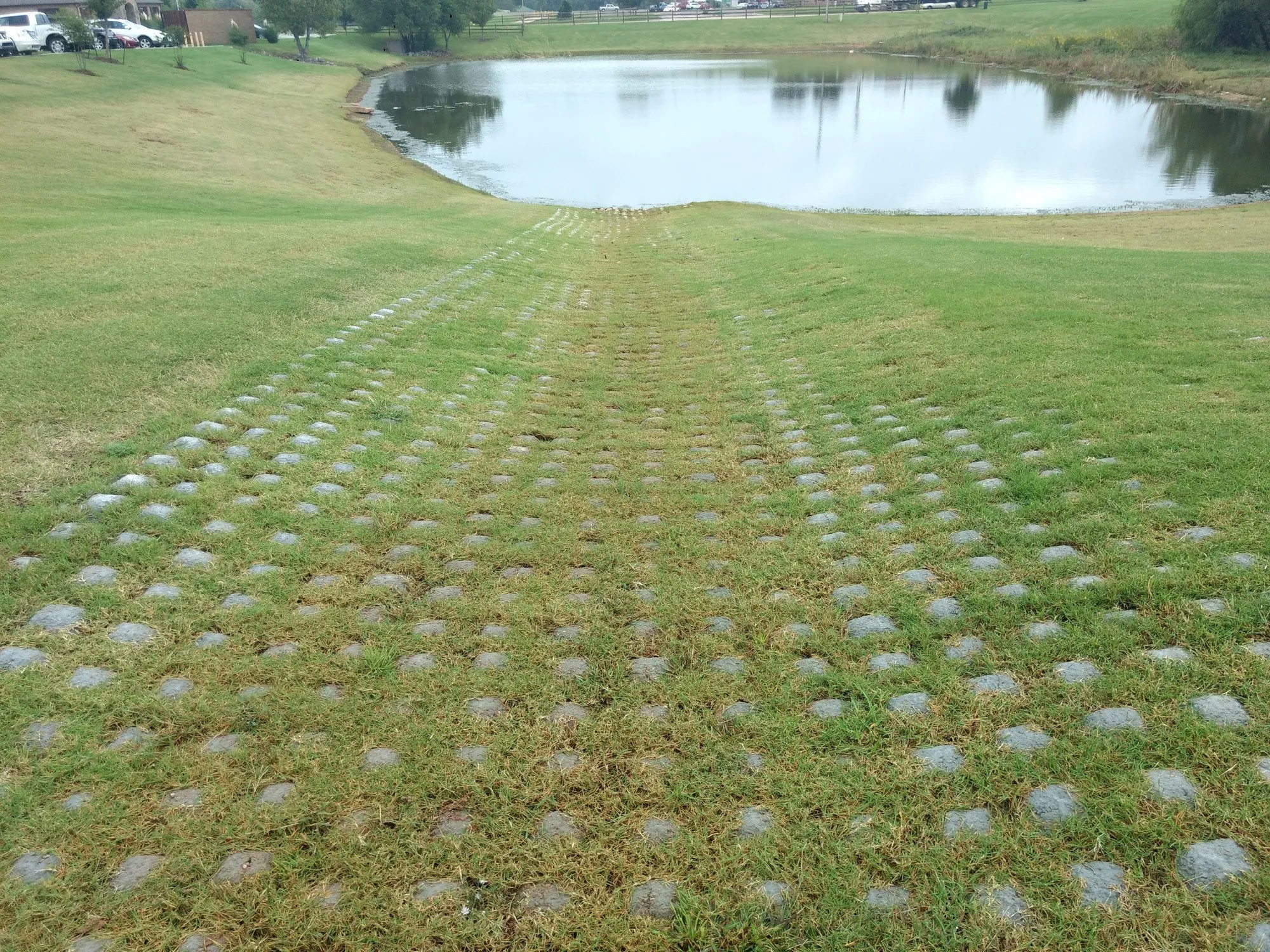 Flexamat A mat of concrete blocks, unrolled over the prepared bank. Grass grows up through it, and the concrete is still there.
3Estimate
Get your free online estimate
Takes about 20 seconds. Your price range arrives by email within 24 hours.
Rather talk? Call (954) 284-0812.
What happens after you write
We call back
Within 2 hours on business days (usually sooner).
Free site visit
For one lake, within 7 days (usually sooner). The method is settled on site.
Written proposal
With a price range, within 2 days of the site visit.
If you ask for an online estimate instead, you get a price range within 24 hours. It is a range, not a quote, and it never names a method.
4Questions
Quick questions
Can the edge be made walkable again?
That is what the repair is for: it rebuilds the edge of the bank and puts sod back down to the water. Which method fits your bank is settled on the free site visit.
What do you check on the free site visit?
Before we quote anything, we walk your shoreline and look at the size of the drop-off, whether there is a shelf under the water, whether the lake has a water control structure, the slope, and where the water is coming from. The visit is free for one lake, and we come within 7 days (usually sooner). A written proposal with a price range follows within 2 days of the visit.
Do I need a permit, and who handles it?
A community’s stormwater lake is a permitted structure, and we are restoring it, not building a new one. We prepare and file the paperwork, and the proposal says which permit your lake needs and how long it should take. We tell you before you sign, not after.
What does it cost?
Most jobs fall between $50,000 and $500,000. The realistic minimum is about $10,000. Four things move the price: equipment access, permits, the depth and condition of the lake bottom, and the length of shoreline. The online estimate gives you a range, not a quote, within 24 hours.
Can you tell us the method from photos?
No. Photos help us prepare, but the site visit decides the method. We do not recommend a method from a photo or from a calculator.
What do you put in writing?
A five-year workmanship warranty on what we build, and no handover until the sod has rooted.