Home · Technology · Hydroseeding
1Problem
Hydroseeding and erosion control in South and Central Florida
Bare soil washes away with the first big rain. We spray seed, mulch and fertilizer in one pass, so grass can take hold and keep the soil in place.
Get my free online estimateTakes about 20 seconds · no site visit needed · or call (954) 284-0812
Is this your site?
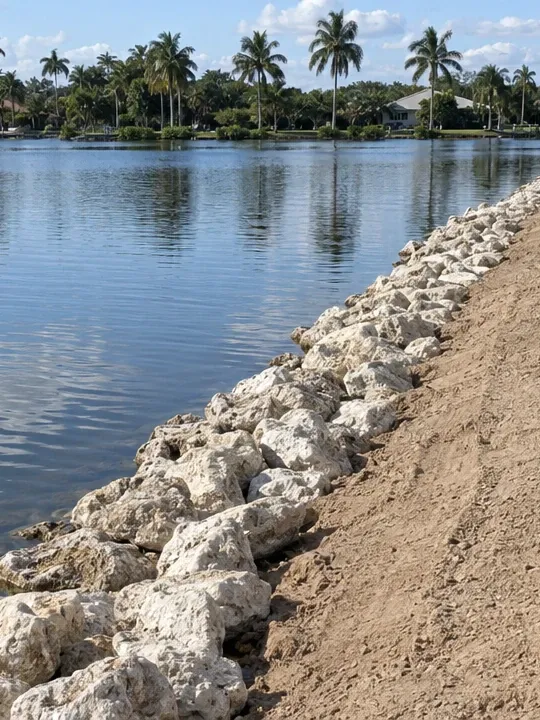 The bank is bare after a repairNew riprap or a regraded slope, and no grass yet.
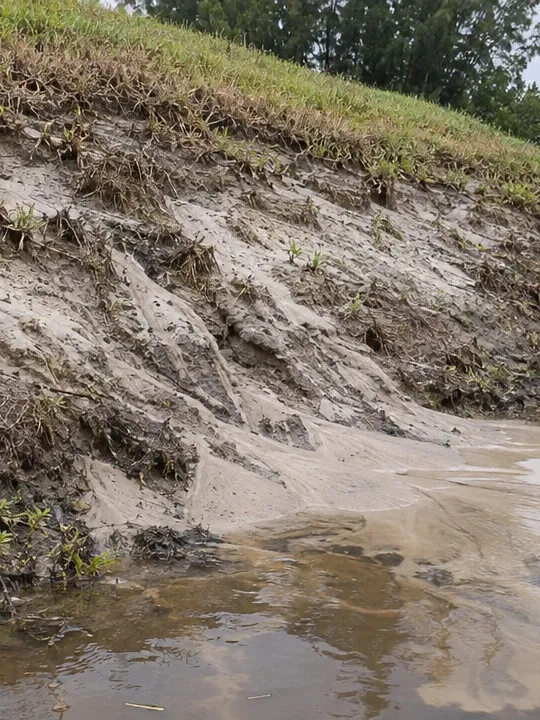 The pond slope is washing outRills and gullies after every heavy rain.
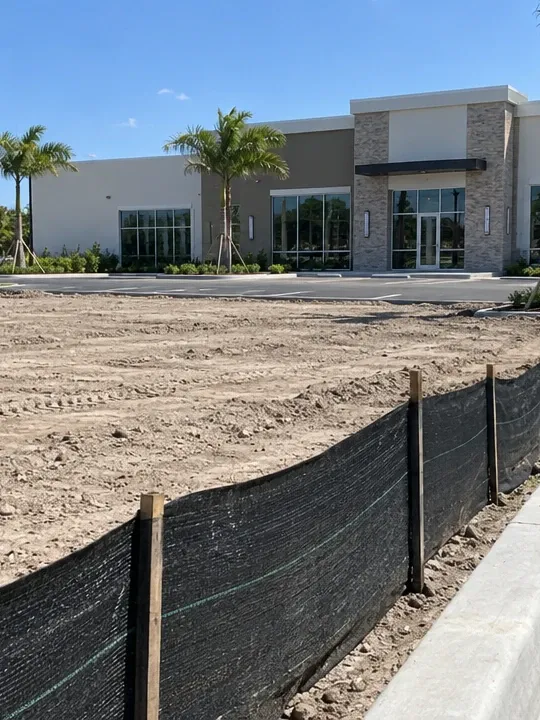 The site needs grass to close outGraded dirt, silt fence, and a final inspection coming.
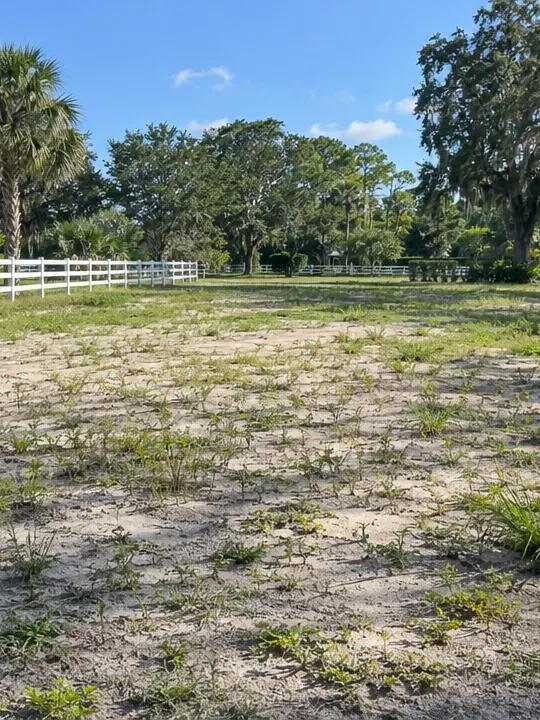 A big lot needs to turn greenToo large to sod at a price that makes sense.
2Repair
Before, during and after
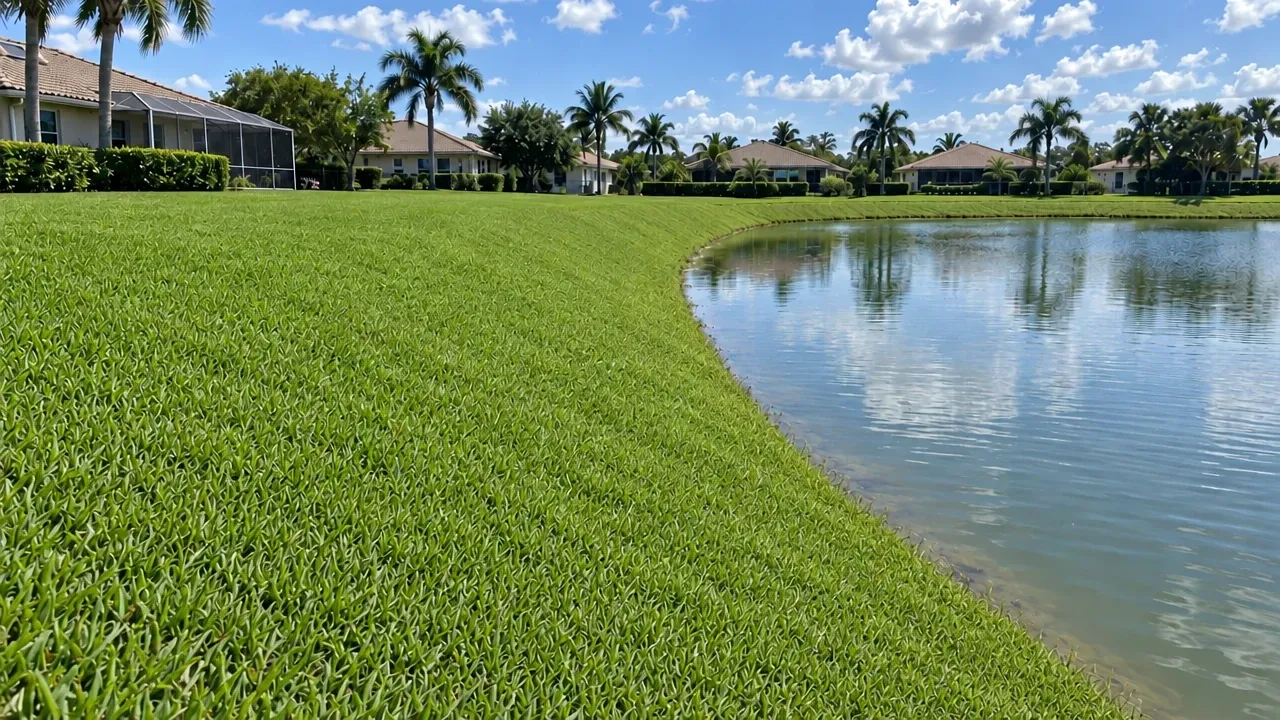
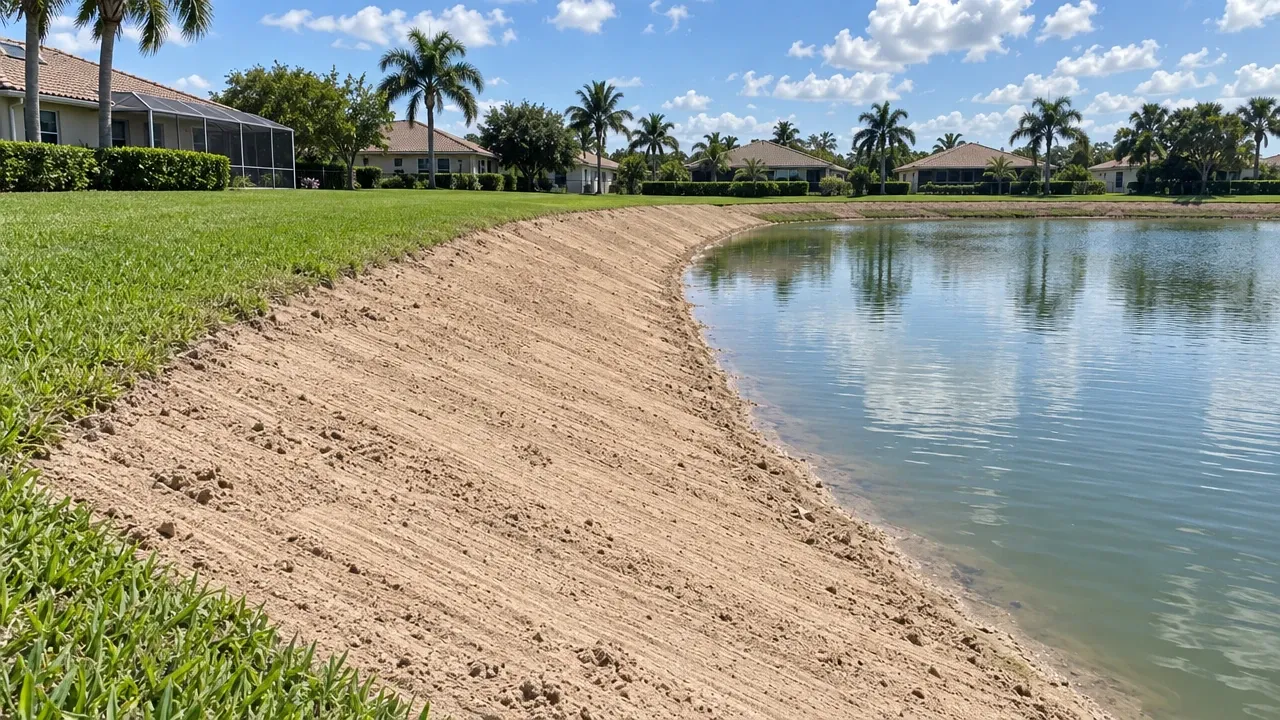
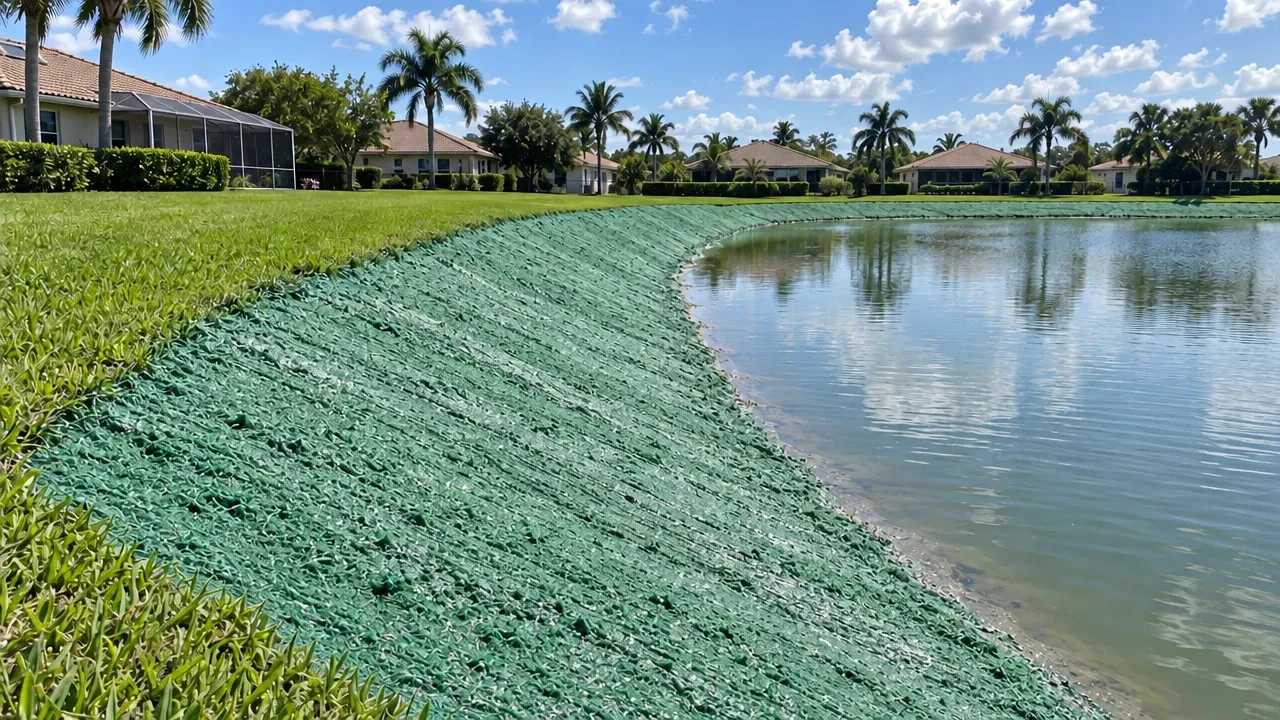
What goes into the slurry
- Seed matched to the site. Argentine bahia for most South Florida slopes and banks: drought tolerant, comes up from seed. Common bermuda where the site gets full sun and fertilizer.
- A nurse crop for the season. Annual ryegrass in the cool months, browntop millet in summer. It comes up first and holds the surface while the bahia germinates.
- Wood fiber hydromulch with a tackifier. It holds seed and moisture on the sand and sticks to the slope. The green dye shows that every square foot is covered.
- Starter fertilizer based on a soil test, within the fertilizer rules for your city and county.
- Seeding rate from UF/IFAS: 5 to 10 pounds of bahia seed per 1,000 square feet.
- Florida Certified General Contractor CGC1513865. FDEP Stormwater and Erosion Inspector on the team.
- 21 to 30 days
- Argentine bahia germination under good conditions, per the seed supplier. A nurse crop greens the surface sooner.
- 5 to 10 lb
- of bahia seed per 1,000 sq ft, the UF/IFAS recommendation.
3Estimate
Get your free online estimate
Takes about 20 seconds. Your price range arrives by email within 24 hours.
Rather talk? Call (954) 284-0812.
4Questions
Quick questions
What is hydroseeding?
A truck or trailer mixes seed, wood fiber mulch, fertilizer and water into a slurry and sprays it onto bare soil. The mulch holds the seed and the moisture in place, so grass can start on slopes where loose seed would wash off.
Where does it work, and where not?
It works on bare slopes, pond and lake banks, construction sites, roadsides and large lots. It does not work for St. Augustine, the most common lawn grass in South Florida: St. Augustine is not grown from seed and goes in as sod or plugs. If you want a St. Augustine lawn, sod is the answer, and we will tell you so.
Which grass do you use?
Mostly Argentine bahia. It is drought tolerant, handles sandy soil, and has a darker, broader leaf than Pensacola bahia, which suits South Florida. For full sun and heavier use, common bermuda. A nurse crop of annual ryegrass (cool months) or browntop millet (summer) covers the ground first.
When is the best time to hydroseed in South Florida?
Bahia germinates best in warm, wet weather, so the rainy season (late spring through summer) is the easiest time. In the cool months we add annual ryegrass so the surface is covered while the bahia waits for warmer weather.
How long until it is green?
The green mulch is visible on day one. The nurse crop comes up first. Argentine bahia takes about 21 to 30 days to germinate under good conditions, and longer when it is dry or cool. Full cover takes a full growing season.
Does it need water?
Yes. Keep the surface moist, lightly and often, for the first two to three weeks. If the site has irrigation, we set it up for that. If it does not, we tell you what temporary watering it needs before we spray.
What are the downsides?
It is not instant like sod, it needs regular watering at the start, and heavy rain in the first days can move seed on steep slopes. On steep banks we use more mulch, or an erosion control blanket.
Hydroseeding or sod?
Sod gives you grass the same day and is the only option for St. Augustine. Hydroseeding costs less per square foot on large areas and slopes, and the roots grow in place.
What does it cost?
The online estimate gives you a price range, not a quote, within 24 hours.
Do you also repair the bank?
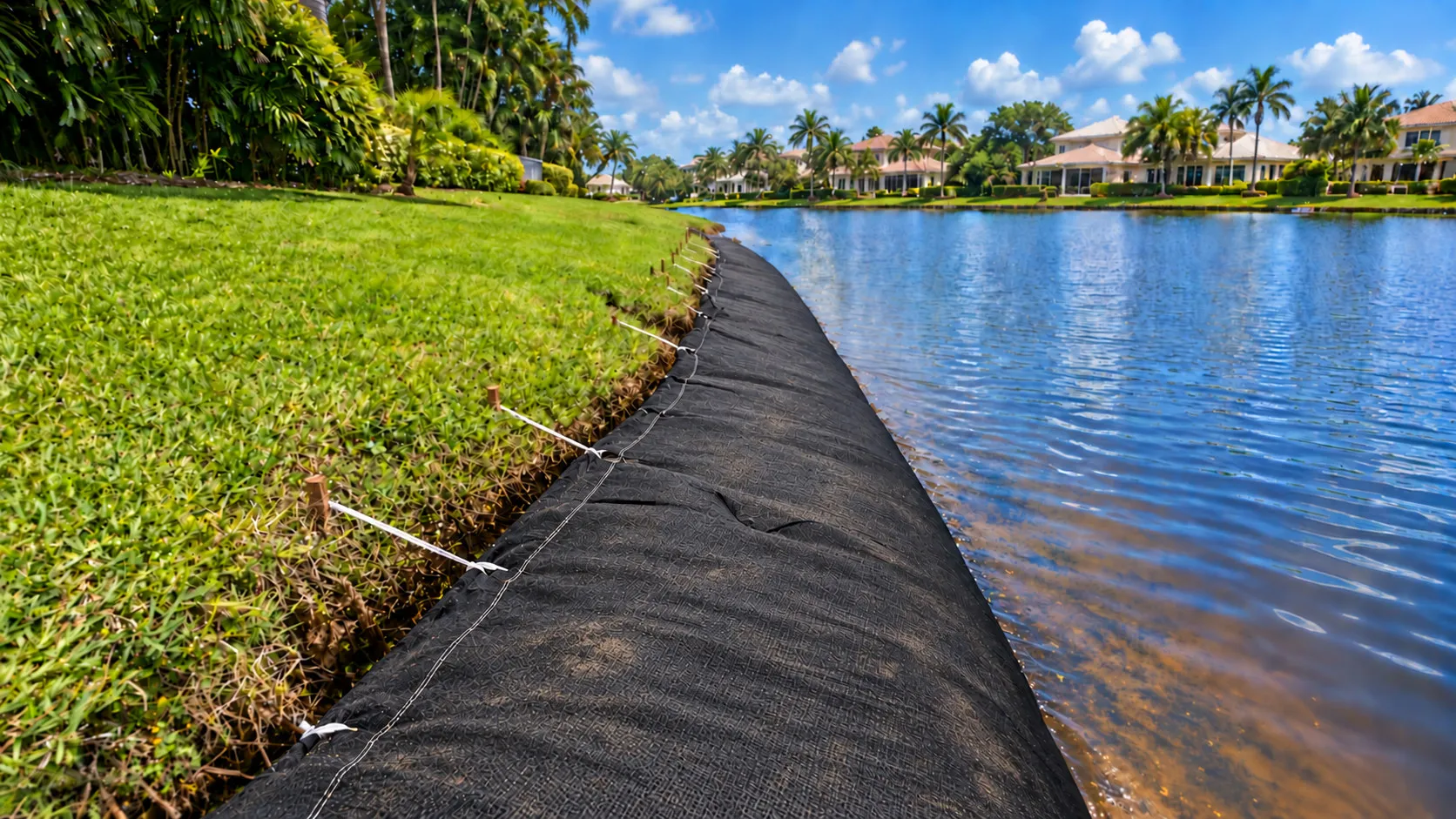
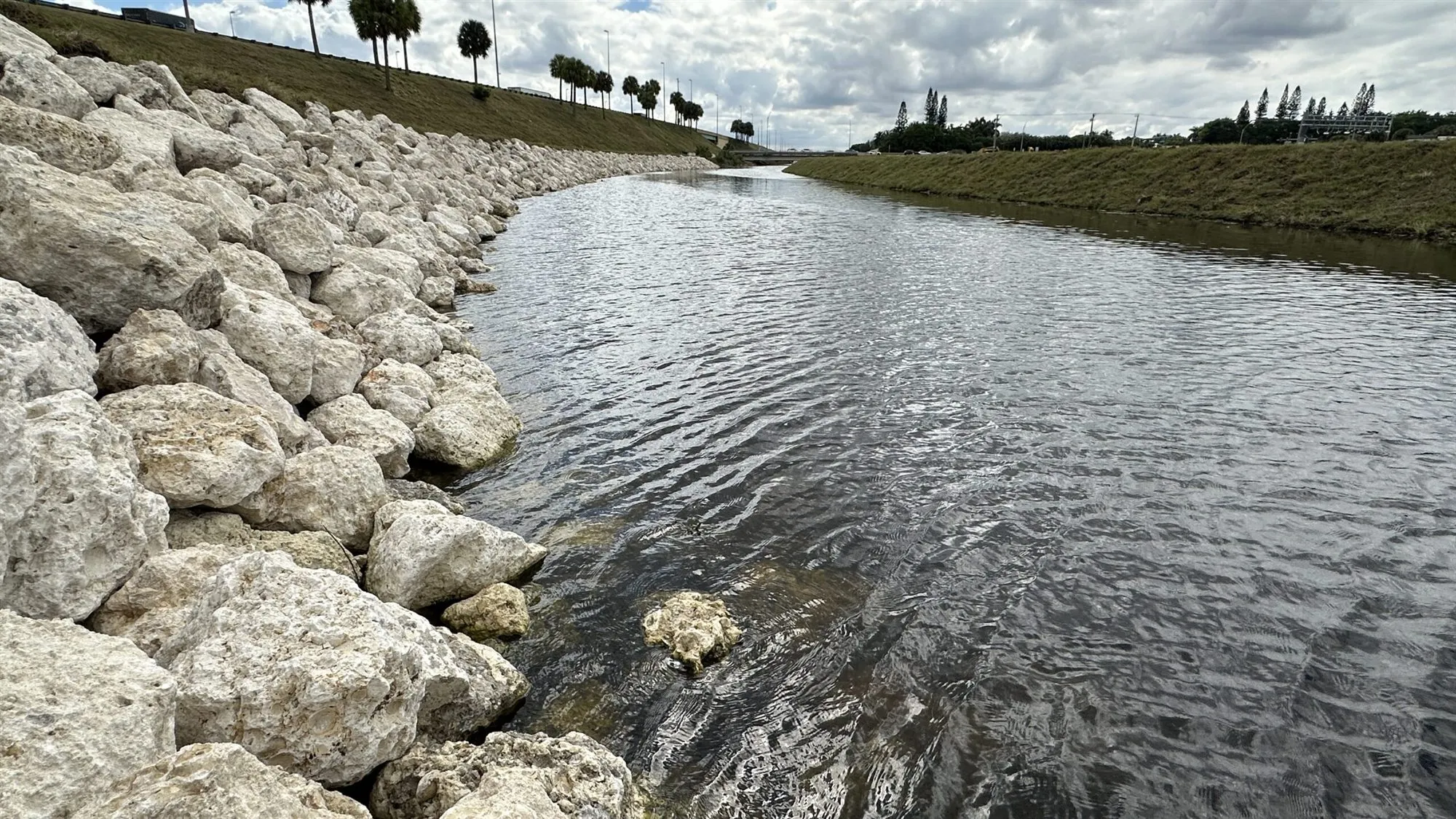
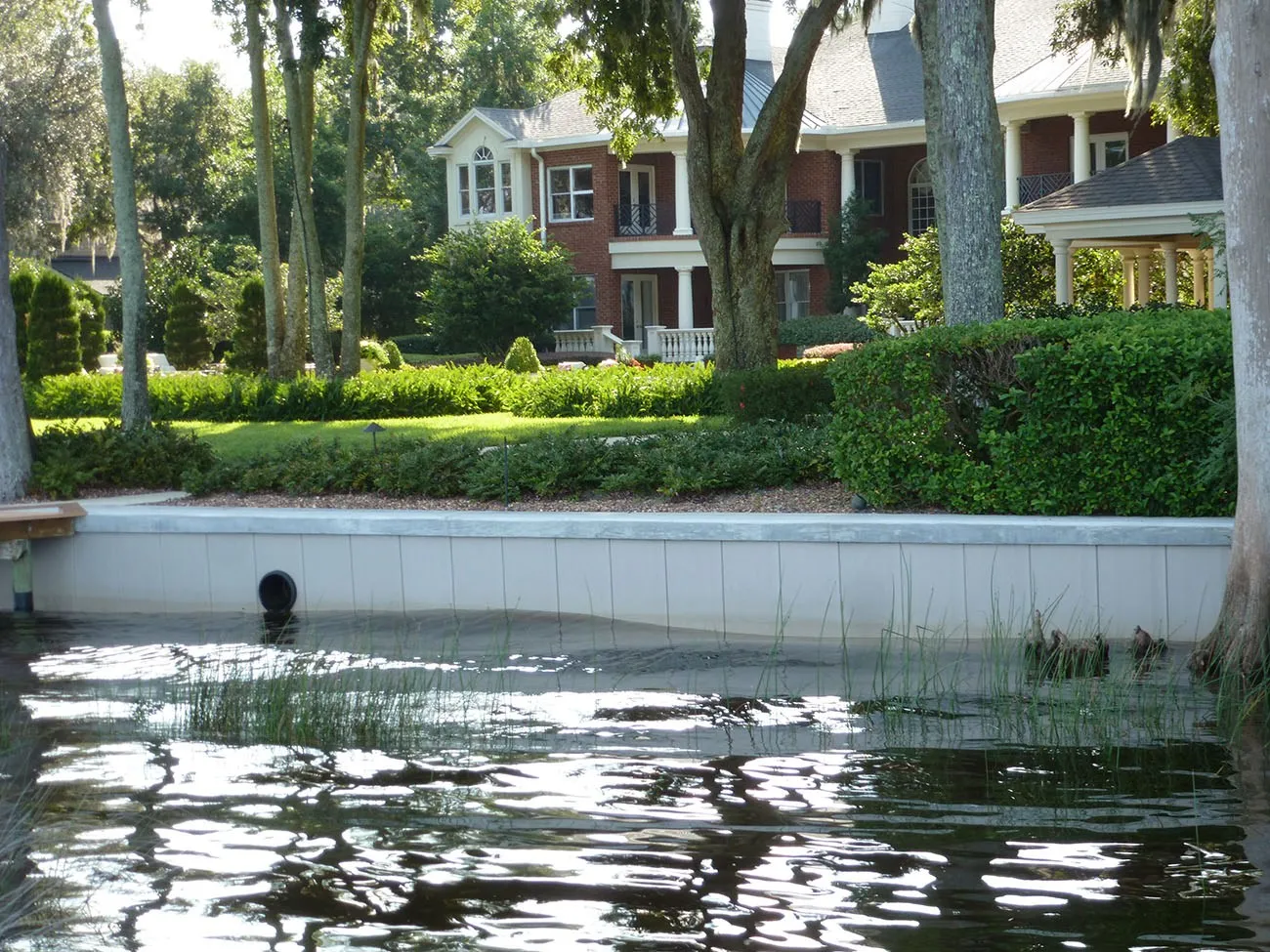
Yes. If the bank is already washing out, grass alone will not hold it. We rebuild it with a geotube, riprap or a vinyl seawall, and then seed it.
Who are you?
ShoreWorks LLC, Florida Certified General Contractor CGC1513865. We work in 21 counties of South and Central Florida.
5Other solutions
When the bank itself is going
Grass alone will not hold a bank that is washing out. We rebuild it first. The site visit decides which method fits.