Home · Who we serve · HOAs and lake communities
Lake bank repair for HOA boards and lake communities
“The bank is collapsing.” If that sentence is on your agenda, this page is for the board: the cause, what the lake’s permit expects, the methods, the price range, and what we put in writing.
1The problem
“The bank is collapsing.”
Or: someone could fall in. The lake looks bad. It floods when it rains.
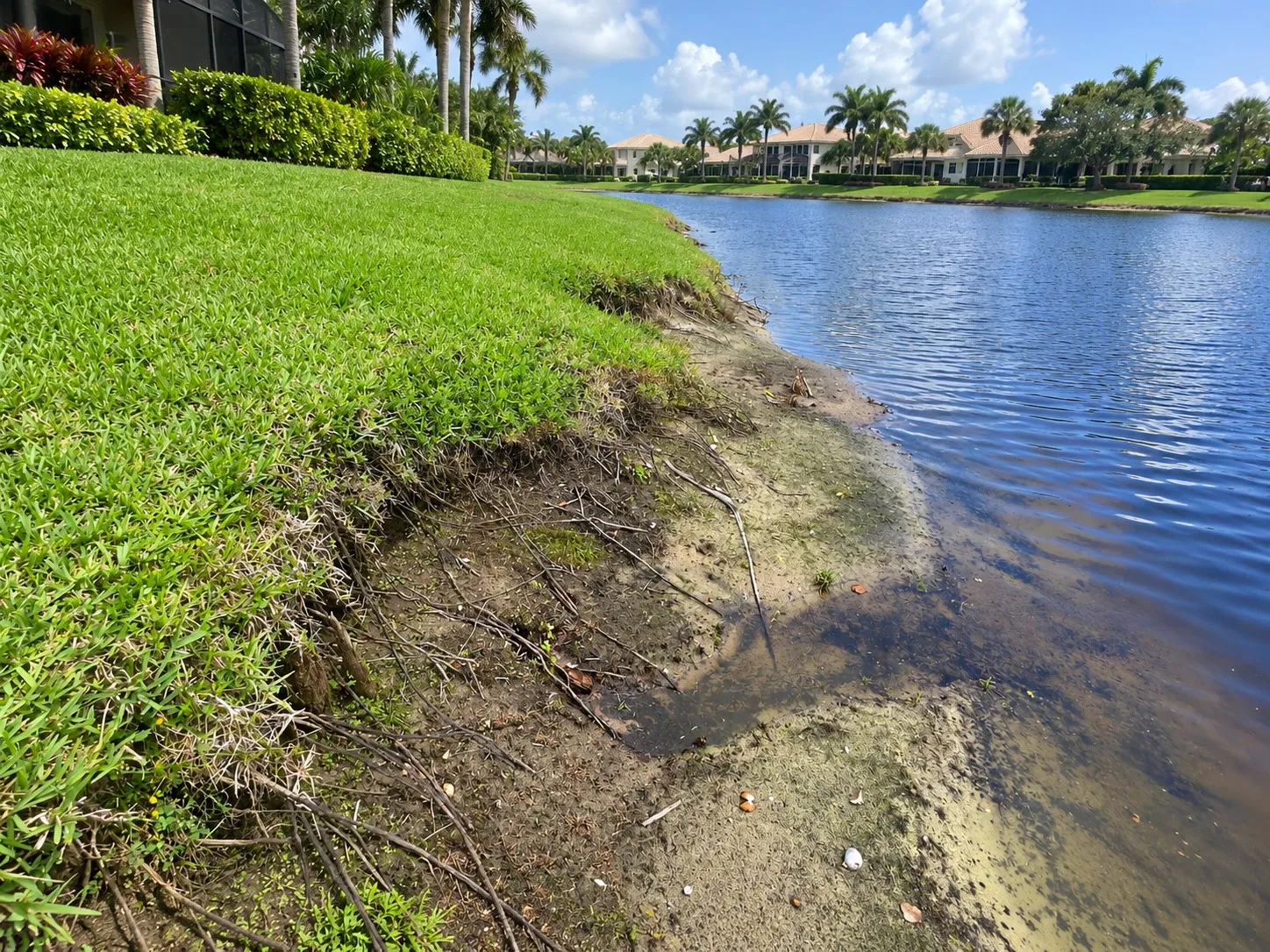
A collapsing bank is a symptom. The cause comes first: water running onto the bank from downspouts and drain pipes, or water that is deep at the edge, with no shelf: no flat ledge under the water.
A board needs two things before it votes: the options side by side, and the reason for the one that is recommended. The options are on this page. The reason comes from your own bank: the method is settled on the site visit, and a written proposal with a price range follows within 2 days of the visit.
2For the vote
What the board has to defend
Why repair the bank, and why this way. Below is what public authorities say, each one named. Those are their statements, not our promises. Our own part is the last line.
Our part. We prepare and file the paperwork, and the proposal says which permit your lake needs and how long it should take.
3Estimate
Get your free online estimate
Takes about 20 seconds. Your price range arrives by email within 24 hours.
Rather talk? Call (954) 284-0812.
What happens after you write
We call back
Within 2 hours on business days (usually sooner).
Free site visit
For one lake, within 7 days (usually sooner). The method is settled on site.
Written proposal
With a price range, within 2 days of the site visit.
If you ask for an online estimate instead, you get a price range within 24 hours. It is a range, not a quote, and it never names a method.
4Answers
Questions boards ask
Why not just seed it, or hydroseed?
We have done both. On a 4:1 bank the first rain carries seed into the lake, with or without a blanket, so we do not recommend it. Sod holds from the first day.
What grass do you use?
St. Augustine ‘Floratam’ for most communities; 419 or Celebration Bermuda on golf courses. Soil-based sod roots better than sand-based.
What about our landscapers?
Mowing on top is fine. Edging at the waterline is the one thing to stop. We give your crew a one-page guide and walk the bank with them at handover.
What if the water level drops in the dry season?
It will. Florida lakes drop every dry season, and a submerged tube can show for a while. That cannot be fully prevented. Where we expect the level to fall, we cover the submerged tube with a protective fabric, and the care guide tells your crew what to look for at the waterline.
Does the repair need a permit?
A community’s stormwater lake is a permitted structure, and we are restoring it, not building a new one. What that takes depends on three things we check on the free site visit: which district your lake sits in, whether the design changes, and whether an engineer’s seal is required. We tell you before you sign, not after.
We prepare and file the paperwork and put the timeline in the proposal.
What is free, and what is paid?
The site visit for one lake is free, and we come within 7 days (usually sooner). The drone and sonar shoreline survey is a paid service, sold on its own.
Several lakes, or a whole community? Then we quote the paid survey instead of the free visit.